
A shattered window exposes a property to weather damage, theft, and further structural risk within minutes. Trident Glass Services, with over fourteen years of hands-on glazing experience across Sydney, has secured hundreds of damaged storefronts, homes, and commercial units through professional temporary window boarding. This guide covers the exact circumstances that call for boarding, the materials and fastening methods that hold up under Sydney's weather conditions, the step-by-step process for a secure installation, and the reasons DIY boarding often fails to protect a property adequately. Property owners searching for Emergency Glass Repair Sydney services typically need this protective measure first, since boarding buys the time required to source matching glass and schedule a permanent fix without leaving the building vulnerable. The sections below walk through each stage of that process in detail.
Why Temporary Window Boarding Matters After Glass Damage
Broken glass rarely stays contained to a single pane. Wind works loose fragments deeper into the frame within hours, and every gap that opens up becomes an entry point for rain. The risk to anyone standing nearby rises with each hour the opening stays uncovered. Insurance assessors also expect documented evidence that a property owner took reasonable steps to limit damage after an incident. Boarding a window immediately demonstrates that diligence and can directly affect the outcome of a claim.
A poorly secured window also invites opportunistic entry. Retail units and warehouses report a measurable spike in break-ins when broken glass remains exposed overnight. Trident Glass Services treats boarding as a structural safeguard, not a cosmetic patch, because the difference between a correctly fitted board and a loosely propped sheet often determines whether a property stays protected until repair.
When Temporary Boarding Becomes Necessary
Several situations call for immediate boarding rather than waiting for a full glass replacement appointment:
Storm damage that shatters a pane outside of business hours
Attempted break-ins that leave a frame compromised
Vehicle impact on shopfront or ground-floor glazing
Vandalism affecting residential or commercial windows
Structural movement that cracks glass and destabilises the surrounding frame
Each scenario carries a different risk profile. A cracked pane from settling foundations, for example, requires careful assessment before boarding to avoid further stress on the frame. Trident Glass Services evaluates the specific damage pattern before selecting a boarding method, since the wrong approach can worsen the existing crack or void a warranty on the frame itself.
Materials and Methods That Hold Up in Sydney Conditions
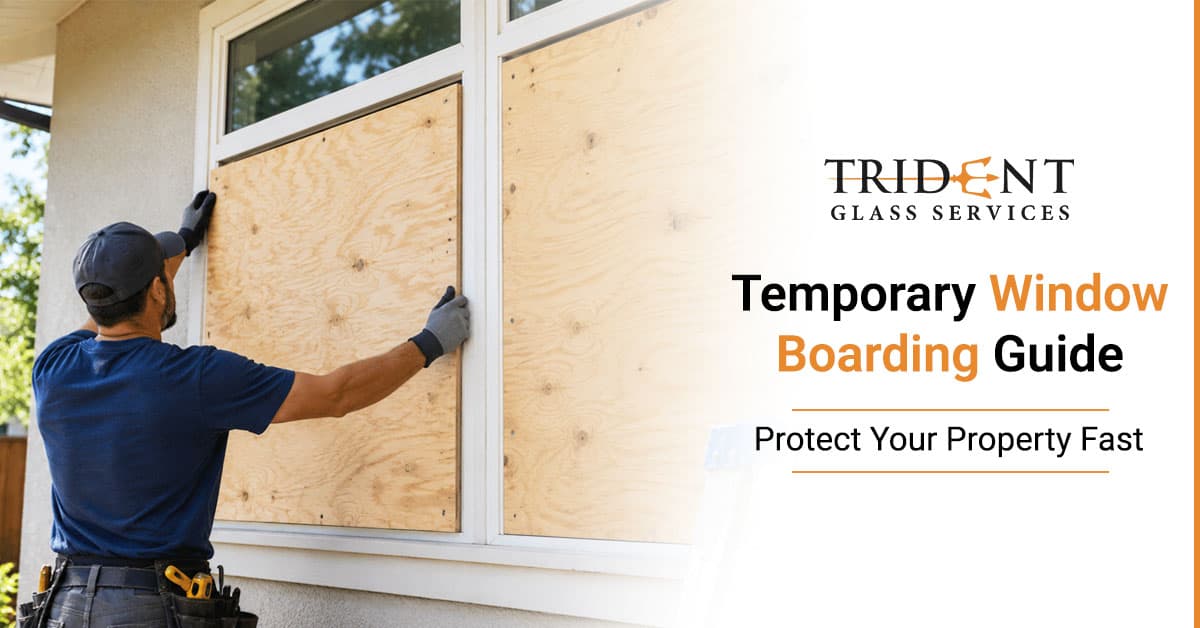
Plywood remains the standard material for temporary boarding because it offers rigidity without excessive weight. Marine-grade plywood, at a minimum of twelve millimetres thick, resists warping from humidity far better than standard construction-grade sheets, a distinction that matters across Sydney's coastal and inland climate variations.
Fastening method matters as much as the board itself. Screws driven into the surrounding frame, rather than adhesive tape or nails alone, distribute pressure evenly and resist wind uplift during storms. Weatherproof sealant along the board's edges prevents water penetration into wall cavities, which can otherwise lead to mould growth and additional repair costs weeks after the original incident.
Commercial properties often need more than weatherproofing. Security-rated boarding with anti-pry fittings discourages a second attempt at entry, which matters most in the days immediately following a break-in. The right fastening approach depends on what the frame is made of. Aluminium takes screws differently than timber, and the wrong fastener in a uPVC frame can crack the material outright, so Trident Glass Services confirms the frame type before selecting a board thickness and fastening pattern.
Step-by-Step Process for Secure Temporary Boarding
Clear the area of loose glass fragments first. Shards left on the frame or the ground cause injuries during installation, and fragments missed at this stage often work loose and fall days later.
Measure the opening itself, not an assumed standard size. Frames shift and warp over time, so a board cut to a textbook measurement rarely sits flush against the actual opening.
Cut the board with roughly five centimetres of overhang on each side. That overhang gives the fasteners solid frame to grip, rather than relying on the thin edge of the opening.
Fasten the board with screws spaced every twenty to thirty centimetres. Even spacing keeps the board rigid enough to resist wind load instead of flexing at the corners first.
Seal the perimeter with a weatherproof sealant. Skip this step and moisture works its way into the wall cavity long before anyone notices a problem.
Inspect the finished job for loose sections, exposed edges, or gaps. A board that looks secure from a distance can still fail at a corner nobody checked closely.
Skip any one of these steps and the board typically fails at the exact moment it is tested, during heavy rain or a sudden wind gust rather than on a calm day.
Risks of DIY Boarding and Why Professional Support Matters
Many property owners attempt to board a window themselves using whatever materials are on hand. This approach carries several risks that are not always apparent until the board fails.
Incorrect fastener placement can pull loose from ageing timber frames, especially in older Sydney properties.
Untreated plywood absorbs moisture and can swell or rot within days in humid conditions.
Gaps between the board and frame allow water ingress that damages insulation and internal wall surfaces.
Improperly secured boards pose a fall hazard on upper floors or in high-traffic commercial areas.
A qualified glazier checks the frame condition before choosing materials, then installs the board to a standard built for actual weather and security pressures rather than a best guess. That matters more on heritage buildings, multi-storey properties, and commercial premises, where a failed board becomes a liability issue rather than a minor inconvenience.
From Temporary Protection to Permanent Glass Restoration
Temporary boarding buys time. It does not replace the glass, and it should not stay in place longer than necessary. Once a property is secured, the priority shifts to sourcing matching glass, whether standard float glass, laminated safety glass, or toughened panels required by current building codes. Trident Glass Services manages that transition directly, moving from the initial boarding job through to full reglazing without handing the property owner off to a second trade.
Interior spaces often need attention as well, particularly when water gets in through a compromised pane before boarding is completed. Property owners undertaking Glass Replacement Sydney work benefit from staying with one provider who already inspected the original damage, because that continuity cuts down on delays and keeps the replacement glass consistent with the building's original specification. Trident Glass Services has carried out this work across Sydney for fourteen years, on homes, retail premises, and heritage buildings alike.