
Run your hand along the edge of a glass shower screen or a bathroom mirror and you'll notice something most people never think to ask about, the edge itself has a shape, a finish, a decision someone made before it was ever installed. Edge finishing might seem like a minor detail buried at the end of the manufacturing process, but it affects safety, appearance, and how the glass holds up over time. Whether you're weighing up a shower screen replacement or planning a full glazing project, understanding the difference between flat polish, bevel, and pencil edges will help you make a choice that actually suits the application.
Why Edge Finishing Matters More Than It Looks
Raw cut glass has sharp, vulnerable edges, not something you'd want in a shower screen, balustrade, or splashback where hands and bodies come into regular contact. Edge finishing smooths and shapes that raw edge, but the specific finish chosen also affects how light catches the glass, how the edge holds up to chipping, and how the final installation reads visually in the space.
Different finishes suit different applications, and getting this wrong doesn't just look slightly off, it can affect durability and safety over the life of the installation.
Flat Polish: Clean, Simple, and Widely Used
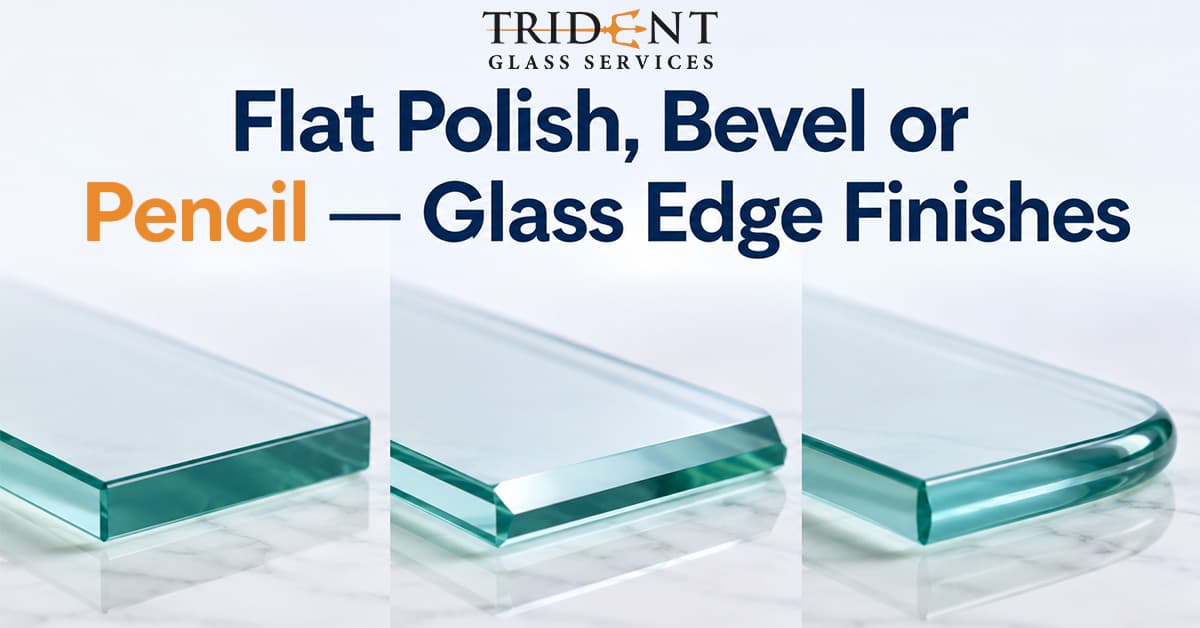
A flat polish edge is exactly what it sounds like, the edge is ground flat and polished to a smooth, glossy finish without any additional shaping.It's the most common finish for standard glazing work because it's easy to produce, cheap and works in a wide range of applications without drawing attention to itself.
Flat polish is generally good for:
Splashbacks and kitchen glass panels where a clean, subtle edge fits the overall esthetic
Glass partitions and office glazing where the edge isn't a visual feature
Standard window and door glazing where function is more important than decorative detail
Budget-conscious projects where a dependable, safe finish is more important than the look
It's a practical choice, and for most everyday glazing requirements, it does exactly what it needs to do without excess cost.
Bevel: The Decorative Option
A beveled edge is angled and ground at roughly 45 degrees around the perimeter of the glass, creating a faceted look that catches and refracts light differently than a flat edge. This finish adds a distinctly decorative quality, which is why it shows up so often in mirrors, feature glass, and higher-end residential glazing.
Bevel edges tend to suit:
Mirrors, particularly larger statement pieces where the light-catching effect adds visual interest
Glass balustrades and staircase panels where a refined, upscale look is part of the brief
Feature glass in living areas, entryways, or anywhere the glass itself is meant to stand out
Table tops and other furniture-style glass applications
The trade-off is cost and complexity, beveling takes more processing time than a flat polish, which typically reflects in the final price. It's worth it for the right application, but it's not necessary everywhere.
Pencil Edge: Rounded and Practical
A pencil edge rounds the glass edge into a smooth, rounded profile, similar in shape to the tip of a pencil. It is a compromise between the simplicity of flat polish and the decorative quality of a bevel, delivering a soft, tactile finish that is particularly forgiving in high-contact areas.
This finish is commonly specified for:
Shower screens and enclosures, where hands regularly contact the edge and a rounded profile feels safer and more comfortable
Glass shelving and areas prone to frequent handling
Pool fencing and balustrades, where a smooth, rounded edge reduces the risk of chipping from impact
Any application where the edge will see regular physical contact rather than sitting purely as a visual element
For anything involving a glass pool fencing installation or a frameless shower enclosure, pencil edging is often the more sensible practical choice over a flat polish, since it holds up better to the kind of everyday knocks these installations tend to experience.
Matching the Finish to the Application
There's no universally "best" edge finish, the right choice depends entirely on where the glass is going and how it'll be used day to day.
High-contact areas (shower screens, balustrades, pool fencing) tend to favour pencil edges for comfort and chip resistance
Decorative or feature pieces (mirrors, statement glass, table tops) usually lean toward bevel for the visual effect
Functional, low-contact glazing (splashbacks, partitions, standard windows) generally does fine with a flat polish, keeping costs sensible without compromising safety
A good glazier will factor in not just what looks good, but how the glass will actually be touched, knocked, and used once it's installed.
Getting the Right Finish for Your Project
Edge finishing isn't something to leave as an afterthought once the glass itself has been selected. Whether you're planning a glass replacement Sydney installation, a glass balustrade, or a full glazing job across your home or business, the edge finish affects both how it looks and how well it performs over years of use.
At Trident Glass Services, every project, from shower screens to balustrades to custom glazing, gets the right edge treatment specified from the outset, matched to how the glass will actually be used rather than applied as a default. If you're not sure which finish suits your project, getting a proper assessment from an experienced glazier beats guessing.
Reach out to Trident Glass Services for a free quote, and get an edge finish that's built to suit exactly how your glass will be used, not just how it looks on day one.