
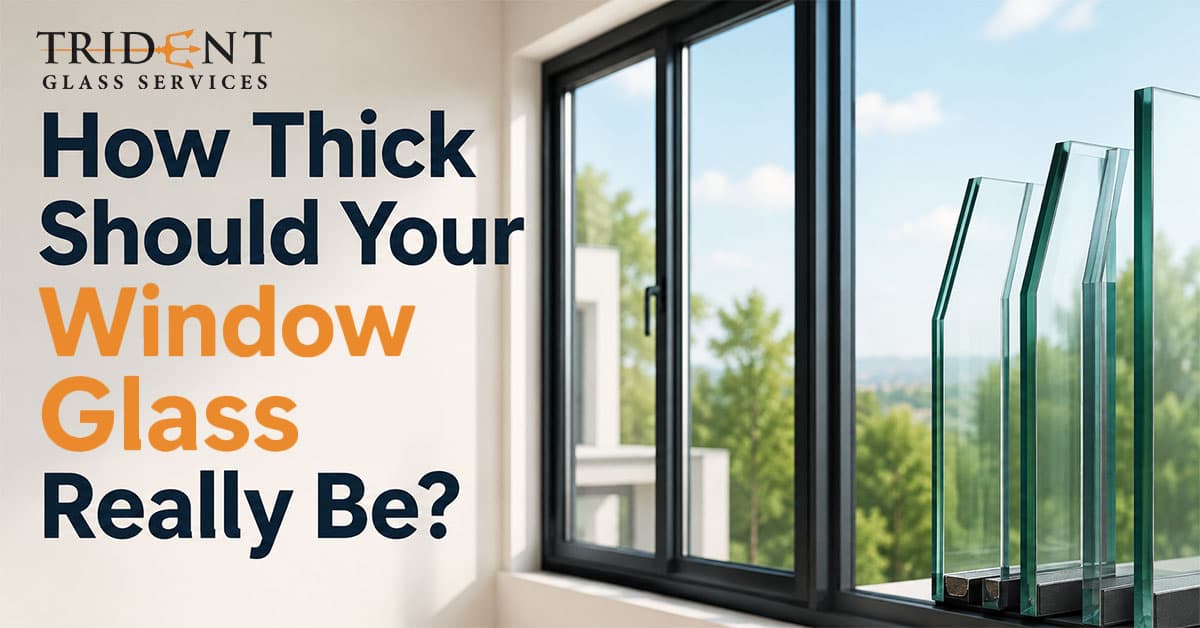
Most people never think about glass thickness until something goes wrong, a pane that flexes visibly in strong wind, a sliding door that feels flimsier than it should, or worse, a breakage that could have been avoided with the right spec from the start. Glass thickness isn't just a technical detail buried in a supplier's spreadsheet, it directly affects safety, noise levels, energy efficiency, and how long your windows actually last. If you're weighing up a glass replacement Sydney for your home or business, understanding what actually determines the right thickness will save you from either overpaying for glass you don't need or underspecifying something that won't hold up.
Why Thickness Isn't a One-Size-Fits-All Answer
There's no single "correct" thickness for window glass, it depends on several factors working together: the size of the pane, its location in the building, local wind loads, and what the glass is actually being asked to do. A small bathroom window and a large picture window facing an exposed coastal position have completely different requirements, even if they're installed in houses right next door to each other.
In Australia, glass selection for windows and doors is governed by AS 1288, the Australian Standard for glass in buildings. This standard sets out minimum thickness requirements based on pane size, wind pressure ratings for the site, and the type of glass being used. A glazier who knows this standard properly won't just guess at a thickness, they'll calculate it based on your specific window dimensions and location.
The Factors That Actually Drive the Decision
A few key variables determine what thickness makes sense for any given window or door:
Pane size: Larger panes need to be thicker to resist the same wind pressure a smaller pane could handle at a lower thickness
Wind zone and exposure: Coastal properties, upper floors, and exposed positions generally require thicker glass than sheltered, ground-level installations
Glass type: Toughened, laminated, and double-glazed units all behave differently under load, and thickness requirements shift depending on which type is specified
Application: Standard fixed windows, sliding doors, and balustrades each carry different safety and structural requirements under Australian standards
Building height and location: Higher floors typically experience greater wind loads, which can push minimum thickness requirements up significantly
None of these factors work in isolation. A large pane in a high-wind coastal zone might need glass considerably thicker than the same size pane in a sheltered inner-city courtyard.
Common Thickness Ranges You'll Come Across
While every job should be calculated individually, a few general ranges tend to come up often in residential glazing:
4mm to 5mm is typical for smaller, sheltered windows in low-wind areas, though this is becoming less common as standards tighten
6mm is a common baseline for standard-sized residential windows in moderate conditions
8mm to 10mm often applies to larger panes, exposed locations, or where additional strength is needed
12mm and above shows up in frameless applications, large sliding doors, or high-exposure commercial glazing
These figures are a starting point for context only, not a substitute for a proper assessment. The right number for your specific window depends on the calculations a qualified glazier runs against your exact pane size and location.
Sliding Doors Deserve Special Attention
Sliding glass doors have different considerations to take into account compared to a standard fixed window. They are generally larger, opened and closed more often and are often located in high traffic areas where impact resistance is as important as wind load. An underspecified sliding glass door Sydney thickness can feel unstable in its track, flex too much when opened or closed or in the worst case be a safety hazard if the glass is not rated for its size and application.
Toughened safety glass is standard practice for sliding doors in most Australian jurisdictions and thickness requirements are generally higher than for an equivalent sized fixed window because of the extra stress of regular movement and the larger unsupported pane area involved.
Why Getting the Spec Wrong Costs More Than Getting It Right
Underspecifying glass thickness to save money upfront rarely pays off. Glass that's too thin for its application is more prone to flexing, cracking under wind pressure, and in some cases, failing to meet the building code requirements needed for compliance or insurance purposes. But overspecifying thickness without a valid structural reason only adds unnecessary weight and cost that can push frames and hardware not made to handle the extra load.
This is really where working with an experienced glazier pays for itself. Getting a proper measurement and load assessment upfront avoids both the safety risk of underspeccing and the wasted cost of overspeccing.
Getting the Right Thickness for Your Situation
At Trident Glass Services, every glass replacement or new installation starts with an assessment specific to your property, its wind exposure, pane sizing, and how the glass will actually be used day to day. With over 14 years handling residential and commercial glazing across Sydney, the team works to AS 1288 standards on every job, so you're never left guessing whether your windows or sliding doors are properly specified for their location.
If you're unsure whether your current glass is up to standard, or you're planning a replacement and want it done right the first time, getting a proper assessment beats guessing every time. Reach out to Trident Glass Services for a free quote and a clear answer on exactly what thickness your windows actually need.