
Sydney storms don't give much warning. One minute it's a normal afternoon, the next you've got hail dents in the glass, a branch through the lounge room window, or a crack spreading across your double glazed windows Sydney installers fitted only last year. At Trident Glass Services, we've spent fourteen-plus years pulling glass shards out of window frames after storms rolled through Parramatta, Chatswood, and everywhere in between, and we've learned that what you do in the first hour matters just as much as who you call afterward.
This guide walks you through exactly that: how to make your home safe straight after a storm, why a hairline crack won't stay small, when a job genuinely needs an emergency call-out, and how insurance claims usually play out. By the end, you'll know what to do the moment weather wrecks your windows, and who to call when it happens.
What counts as storm damage to your windows
Not every mark on your glass after a storm is obvious. We get called out for all sorts of damage, including:
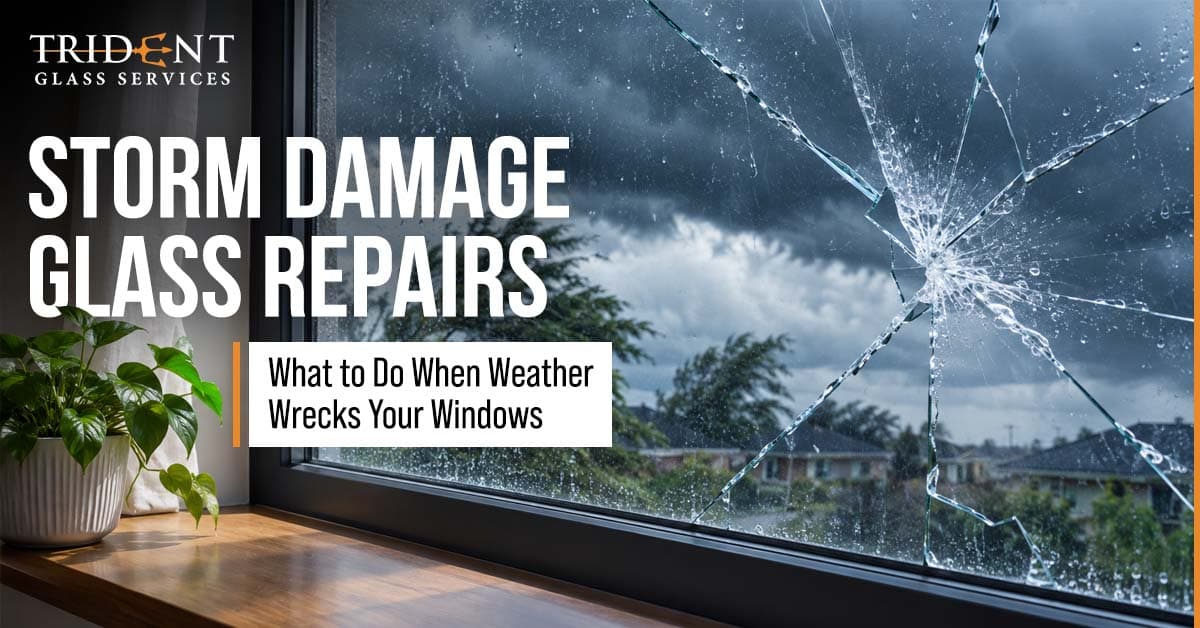
Cracked or shattered panes from flying debris, hail, or falling branches
Warped or dislodged frames after wind pressure forces them out of alignment
Water seeping through broken or poorly sealed seals around the glass
Chipped or pitted surfaces from hailstones, which weaken the glass even without a full crack
Failed seals in double-glazed units, which show up as fogging between the panes days or weeks later
That last one catches people out. Double glazing can survive a storm with the outer pane intact but the seal compromised, and you won't notice until condensation builds up between the layers. If you spot fogging after a storm, treat it as damage, not just an aesthetic issue.
The first things to do right after a storm
Before you touch anything, think about safety first. Here's the order we recommend:
Keep everyone, especially kids and pets, away from the affected room until the glass is confirmed stable.
Photograph the damage from multiple angles before you clean anything up. Insurers ask for this, and it speeds up your claim.
Cover any broken exterior windows with a tarp or board if it's safe to do so. This stops rain, wind, and wildlife from causing further damage overnight.
Avoid removing large shards yourself. A cracked pane can shift or fall without warning, and cuts from broken glass are one of the most common storm-related injuries we see reported in Sydney.
Call a licensed glazier rather than a general handyman. Glass repair involves specific safety standards, and a rushed DIY fix often needs redoing within weeks.
Why you shouldn't ignore small cracks or chips
A small chip looks harmless, so a lot of homeowners leave it. That's usually a mistake. Glass is under constant stress from temperature changes, wind load, and the weight of the frame itself, and a chip gives that stress somewhere to travel. What starts as a two-centimetre mark on a Tuesday can be a foot-long crack by the weekend, especially if another storm front moves through before you've had it looked at.
There's also a security angle. A compromised pane is far easier to force open or break through completely, which matters if the window faces a side entry or a ground-floor room. Getting it assessed early is nearly always cheaper than waiting for a full pane replacement.
When you need an emergency glass repair, not a scheduled one
Some jobs can wait a few days. Others can't. Book an emergency repair if:
The glass is fully shattered and the opening is exposed to weather
A frame has come loose from the wall and poses a fall or entry risk
Broken glass sits at ground level where children, pets, or foot traffic pass
Rain is forecast within 24 hours and the gap isn't sealed
Trident Glass Services runs a 24/7 emergency line for exactly this reason. Storm damage doesn't wait for business hours, and neither do we. Our vans carry standard pane sizes and board-up materials, so most emergency call-outs get a same-day fix rather than a temporary patch.
Insurance and storm damage: what actually helps your claim
Most home and contents policies in NSW cover storm damage to windows, but the payout depends heavily on documentation. Before you call your insurer, make sure you've covered the basics:
Take dated photos of the damage. This confirms the timeline of the storm event.
Keep the damaged glass if possible. Some insurers request it for assessment.
Get a written quote from a licensed glazier. Insurers use this to validate the claim amount.
Note the exact time and date of the storm. This gets cross-checked against Bureau of Meteorology records.
We provide itemised quotes for every job specifically because insurers ask for them. If you're unsure whether your policy covers a particular type of damage, such as a failed double-glazed seal versus a fully cracked pane, we're happy to talk you through what we're seeing on-site.
How we handle storm damage repairs at Trident Glass Services
Every storm callout follows the same process, regardless of suburb or job size:
We assess the glass, frame, and seal condition on arrival, not just the visible crack
We board up any exposed opening immediately if a full repair can't happen the same day
We match the replacement glass to your existing specification, including safety glass and double-glazed units where required
We provide a written report you can hand straight to your insurer
Our team has worked across Western Sydney, the Hills District, and Northern Sydney, so we know which suburbs tend to cop the worst of a southerly buster and which frame types hold up better under repeated wind load. That local experience shapes how we quote and repair, not just how fast we turn up.
Getting your home storm-ready again
Windows are one of the few parts of a house that fail suddenly and visibly, which makes them stressful to deal with but also straightforward to fix properly once a professional is involved. Whether you're dealing with one cracked pane or a full glass replacement Sydney wide after a severe storm front, the priority is the same: secure the property first, document everything, and get a licensed glazier out before minor damage turns into a bigger repair bill.