
The first sound at 3am isn't the break-in itself. It's the silence right after, the moment someone realises a window's been forced and there's glass on the floor where there shouldn't be. What happens in the next hour matters more than most people expect, not just for safety, but for the insurance claim, the police report, and how quickly the home actually gets secure again.
This guide covers what to do immediately after a break-in involving broken glass, how that response differs from a standard accidental break, what evidence needs preserving before any cleanup begins, and how to choose glass and security upgrades that make a repeat attempt considerably less likely. Reaching out to glass repair Sydney early in this process tends to make the difference between a rushed, temporary fix and a properly secured home.
Why a Break-In Changes the Response
An accidental break and a forced entry call for distinctly different first steps. With an accident, the priority moves straight to safety and cleanup. After a break-in, safety still comes first, but evidence preservation and police involvement need to happen before glass gets touched or cleared away. Rushing straight to cleanup, understandably driven by a desire to restore normalcy, can compromise details that matter for both the police report and any insurance claim tied to stolen property or damage.
What to Do in the First Few Minutes
Safety takes priority over everything else in this situation. A few things worth doing immediately:
Confirm the intruder is no longer on the property before entering any room connected to the break-in
Check for injuries among anyone present, including pets, before touching glass or assessing damage
Call the police before disturbing the scene, since forced entry points often carry evidence, fingerprints, tool marks, footprints in glass debris, that's easily lost once cleanup starts
Avoid walking through the debris field more than necessary until police have had a chance to document the scene
Preserving Evidence Before Cleanup Begins
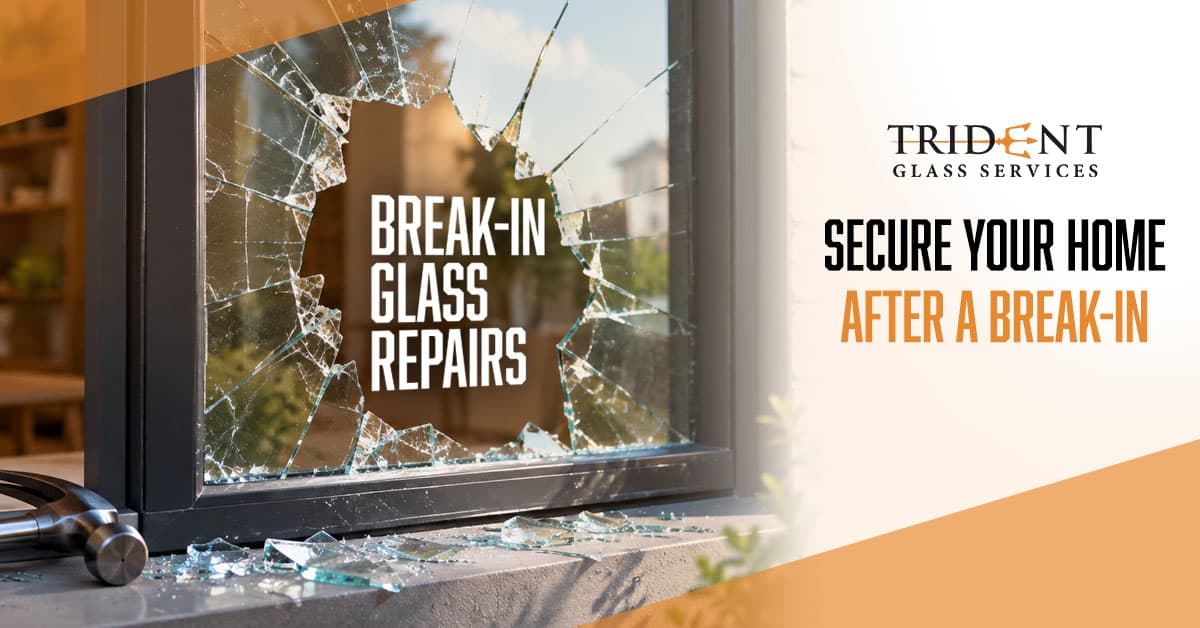
This is where break-in glass damage diverges most clearly from an accidental break. Photographing the scene extensively, the point of entry, the pattern of glass breakage, any tools or debris left behind, before any cleanup starts gives both police and insurers something concrete to work from. Once glass is swept up and the opening is boarded, that documentation opportunity is largely gone.
It's worth resisting the urge to fully clean the area until police have confirmed they've gathered what they need, even if that means living with a temporarily secured but uncleared space for a few hours.
Temporary Securing Without Losing the Evidence
Once police have documented the scene, securing the opening becomes the priority, both to prevent a repeat attempt and to protect the property from weather. Plywood, security screens, or heavy-duty boarding taped and fitted securely around the frame all work as short-term measures. This step should still preserve, rather than fully erase, the damaged area until an insurance assessor has had the chance to review it if a claim is being filed.
Choosing Glass That Actually Deters a Repeat Attempt
Standard annealed glass offers very little resistance to a determined intruder, which is often exactly what made the initial break-in possible.Some upgrade options to consider when replacing the glass:
Laminated glass, which stays together even when broken, slowing and increasing noise levels of forced entry
Toughened safety glass, which requires much more force to break than standard glass and is less likely to leave dangerous, sharp shards
Security film, an added layer applied to existing glass to strengthen it against impact without replacing the entire pane
Upgraded locking hardware and reinforced frames, since glass strength alone does not address a weak surrounding frame or lock mechanism
Combining stronger glass with reinforced frames and hardware addresses the weak point that allowed the original break-in to occur, rather than simply replacing what failed with something identical.
Working Through the Insurance Process
Most home insurance policies will cover damage from a break in, but the process goes much more smoothly if you have the proper documentation, the police report number, photos taken before cleanup, and a clear timeline of events. Insurers sometimes request a quote for both the repair and any recommended security upgrades, so having this ready alongside the claim tends to speed up approval considerably.
Delays in filing a claim can also complicate the process, so notifying the insurer within the timeframe specified in the policy is worth prioritising alongside the police report, rather than treating it as something to handle once the property feels settled again.
Thinking Beyond the Point of Entry
A break-in often prompts a broader look at glass security throughout the property, not just the specific point that was forced. Ground-floor windows, sliding doors, and other vulnerable glass entry points are worth reviewing at the same time as the immediate repair, since addressing one weak point while leaving others unchanged does little to reduce overall risk. This is also a reasonable moment to address other glass elements around the home that may be overdue for attention, shower screens repairs included, while trades are already on site handling security-related glasswork.
Securing the Home Properly, Not Just the Window
Trident Glass Services has handled break-in and emergency glass repairs across Sydney for over 14 years, working directly with police documentation requirements and insurance processes rather than treating a break-in repair as a routine glass job. The focus stays on securing the property properly the first time, not simply replacing what broke.
That silence after a break-in, the moment before anyone's quite sure what to do next, doesn't have to turn into a rushed, poorly documented scramble. With the right sequence, safety first, evidence preserved, and stronger glass chosen for the repair, a break-in becomes a manageable disruption rather than a repeat risk waiting to happen again.