
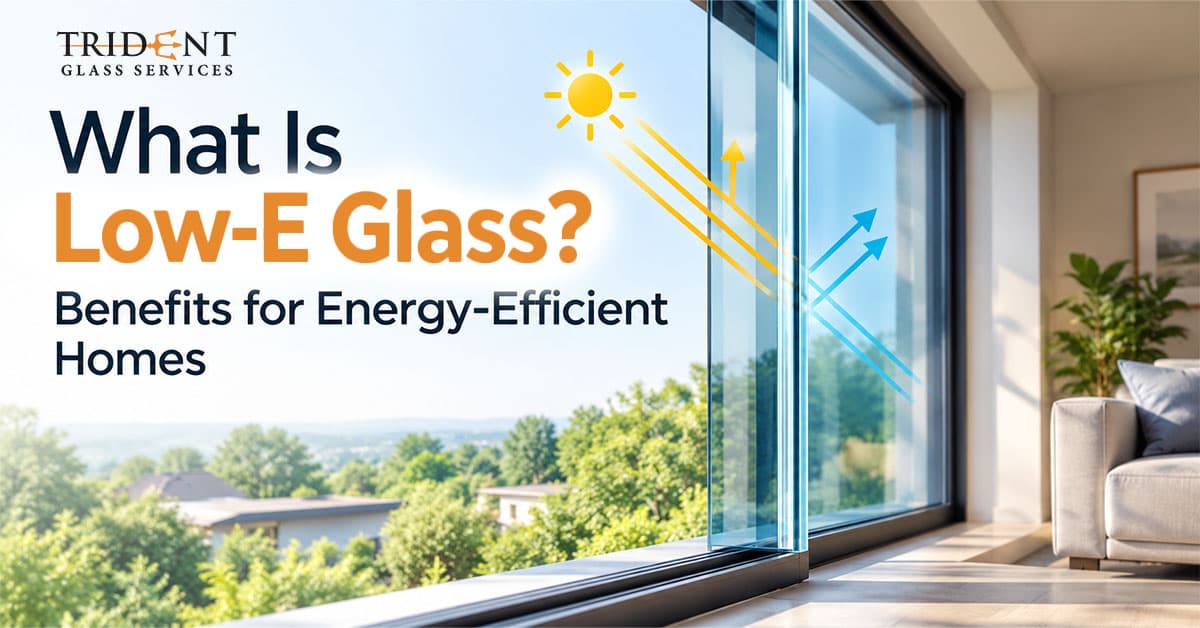
Low-E glass carries a microscopically thin metallic coating that reflects heat while allowing daylight to pass through. In a Sydney home, that coating reduces summer heat gain, holds winter warmth indoors, limits the fading of floors and furniture, and lowers the workload of air conditioners and heaters. Performance depends on three things: the coating type, its position inside the glazing unit, and the U-value, solar heat gain coefficient and visible light transmittance on the product’s rating label. Homeowners can often upgrade by retrofitting double glazed windows with Low-E units inside existing frames, which makes the work practical for established houses as well as new builds. At Trident Glass Services, we assess orientation, frame condition and rating figures before we recommend a specification. The sections below explain how the technology works, what it delivers, which numbers to check and how an upgrade proceeds.
What Is Low-E Glass?
Low-E stands for low emissivity. Emissivity describes how readily a surface radiates heat, and ordinary clear glass radiates it freely. Low-E glass has a silver-based coating, far thinner than a human hair, applied to one face of the pane. The coating reflects long-wave infrared heat back toward its source and transmits visible light.
The window therefore responds to heat from both directions. In winter, warmth from your heater stays in the room instead of radiating out through the glass. In summer, the coating rejects a portion of solar heat before it reaches your interior.
How Low-E Coatings Are Made
Two coating methods are used in Australian glazing, and each performs differently.
Hard-coat (pyrolytic) Low-E: The coating is applied while the glass is being manufactured and fuses into the surface. It tolerates handling well, although its emissivity is higher, so the insulating value is lower.
Soft-coat (sputtered) Low-E: Layers of silver and metal oxides are deposited in a vacuum chamber after the glass is formed. This method achieves lower emissivity and stronger thermal results, but the coating is delicate and must sit on a protected inner surface of a sealed insulated glass unit.
For most Sydney homes, soft-coat Low-E inside a double glazed unit gives the best thermal result.
Where the Coating Sits Inside a Glazing Unit
Glass surfaces in a double glazed unit are numbered from the outside. Surface 1 faces outdoors, surface 2 is the inner face of the outer pane, surface 3 is the outer face of the inner pane, and surface 4 faces the room. The coating position changes how the window performs.
Surface 2: The coating rejects more solar heat before it crosses the cavity. This suits west-facing glazing and homes where summer cooling is the dominant cost.
Surface 3: The coating keeps more indoor heat inside and admits more solar gain. This suits south-facing windows and cooler suburbs where winter heating dominates.
We confirm coating position against the manufacturer’s data sheet for every order. A unit installed with the coating on the wrong surface will not match its rated figures.
Benefits of Low-E Glass for Energy-Efficient Homes
A Low-E double glazed unit filled with argon typically reaches a U-value between 1.4 and 2.8 W/m²K, depending on the frame. Single clear glass in an aluminium frame sits near 5.8. That gap shows up in your daily running costs and comfort.
Lower heating and cooling demand: Less heat crosses the window, so your air conditioner runs shorter cycles and reaches the set temperature sooner.
Steadier room temperature: The inner glass surface stays closer to room temperature, which removes the cold zone beside windows in winter and the radiant heat beside them in summer.
Reduced fading: Ultraviolet light damages timber floors, upholstery and artwork. Low-E coatings reduce UV transmission, and pairing them with laminated glass adds a PVB interlayer that blocks up to 99 percent of UV.
Less condensation: A warmer inner surface reduces moisture on glass and sills, which limits mould growth around window reveals.
Daylight retained: Many Low-E products transmit well over half of visible light, so rooms stay bright without heavy tinting.
Numbers to Check Before You Choose
The Window Energy Rating Scheme (WERS) rates complete window products, frame and glass together, for heating and cooling performance. Three figures on the rating label decide most comparisons.
U-value (W/m²K): This measures heat flow through the window. A lower number means better insulation.
Solar heat gain coefficient (SHGC): This is the fraction of solar heat entering the room, on a scale from 0 to 1. Low values suit hot exposures. Higher values suit rooms that benefit from winter sun.
Visible light transmittance (VLT): This is the percentage of daylight passing through the glass.
A low U-value paired with a high SHGC works well in a south-facing living room that needs winter warmth. A low SHGC works better in a west-facing bedroom that takes hard afternoon sun. In NSW, BASIX certificates also specify U-value and SHGC targets for new homes and larger alterations, so the right figures protect your approval as well as your energy bills.
Retrofitting Low-E Glass in Existing Homes
The coating cannot be applied to glass that is already installed in your home. Upgrading means replacing the glass or the whole window.
Many aluminium and timber frames accept replacement insulated glass units, provided the rebate is deep enough. A standard unit with a 12 mm cavity measures about 20 mm, while single glass is 4 to 6 mm. Frames that are too shallow, warped or deteriorated need new sashes or complete replacement, and we tell you which applies after inspection. Strata schemes and heritage overlays usually require approval for external changes, so we advise you to confirm those requirements before ordering.
Our process follows five steps:
Measure each opening and record its orientation.
Inspect the frame, seals, hardware and rebate depth.
Match the Low-E specification to each elevation using U-value, SHGC and VLT.
Manufacture units to size and install them to AS 1288 and AS 2047.
Seal, test operation and remove the old glass from site.
Why Sydney Homeowners Work with Trident Glass Services
We supply and install glass for Sydney homes, and we specify Low-E units against each window’s exposure instead of applying one product across the house. Each recommendation includes the rating figures for the unit, so you can compare options on measured data. Our installers follow Australian Standards for glass in buildings and for windows, and we explain warranty terms in writing before work begins.
Conclusion
Low-E glass reduces heat transfer, protects interiors from UV damage and stabilises indoor temperature, provided you match the coating type, position and rating figures to each window. Trident Glass Services supplies and installs double glazed windows Sydney homeowners can verify against WERS data, and our double glazing Sydney projects follow a documented process from measurement to final seal. Contact us to arrange an assessment of your windows and receive a written specification for your home.