
Acoustic glass reduces outside noise through laminated panes, a sound-damping interlayer, the right glass thickness and airtight frames. The reduction you achieve depends on the product's Rw rating, the thickness and spacing of each pane, and the quality of the seals around the frame. Traffic, aircraft and rail noise sit at different frequencies, so each source calls for a different glass build-up. Double glazing with an acoustic laminated pane gives windows the highest reduction, and the same laminated panels limit noise transfer inside commercial buildings, including Glass Partitions Sydney businesses install around meeting rooms. Installation quality decides whether a tested rating is achieved on site. At Trident Glass Services, we specify acoustic glass according to the noise source, the building and the budget. The sections below explain each factor in detail.
How Outside Noise Enters a Building
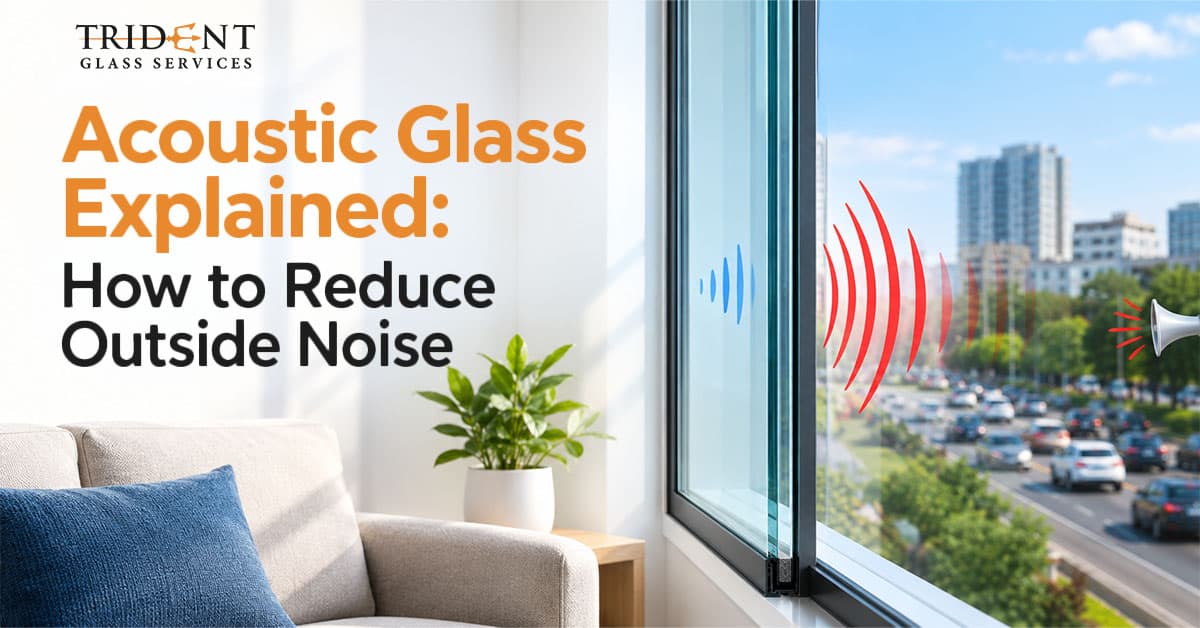
Sound reaches an interior through three paths: the glass, the gaps around the frame, and the walls or roof. Glass is usually the weakest of the three. A standard 4 mm pane vibrates easily when sound waves strike it, and those vibrations pass straight into the room.
Sydney properties face a few common sources. Homes under flight paths receive low-frequency engine noise. Apartments on arterial roads receive continuous traffic noise across a wide frequency range, and properties near the rail corridor receive sharp bursts at irregular times. Glass that performs well against traffic may do less against aircraft rumble, so the source needs to be identified before any product is chosen. A noise measurement taken at the property boundary during peak hours gives the figure that every later decision relies on.
Open sliding windows and unsealed frames create direct air paths. A gap of only a few millimetres removes much of the benefit of a thicker pane.
What Acoustic Glass Is and How the Interlayer Works
Acoustic glass is laminated glass with a polyvinyl butyral (PVB) interlayer bonded between two panes. Standard laminated glass uses a stiff interlayer selected for strength and safety. Acoustic laminated glass uses a softer, sound-damping interlayer that absorbs vibration energy before it reaches the second pane. Laminated construction also keeps the pane intact after impact, so the acoustic layer stays in place if the glass cracks.
Common build-ups include 6.38 mm and 10.38 mm laminated acoustic glass. Heavier glass resists vibration better, and panes of different thickness reduce the coincidence effect, which is a drop in sound reduction at the frequency where a pane resonates with incoming sound.
Reading Acoustic Ratings
Laboratories report acoustic performance as an Rw value, the weighted sound reduction index measured under AS/NZS ISO 717.1. A higher number means greater reduction. A 10 dB reduction sounds roughly half as loud to most listeners.
Rw+Ctr gives a more useful figure for traffic and aircraft noise because the Ctr adjustment accounts for low frequencies. When you compare products, check which figure the supplier quotes.
Glass build-up | Approximate Rw | Typical use |
4 mm single glass | 28 | Standard windows with no noise control |
6 mm single glass | 30 to 31 | General residential glazing |
6.38 mm laminated acoustic | 35 | Bedrooms and living areas on moderate roads |
10.38 mm laminated acoustic | 37 to 38 | Arterial roads and busy commercial frontages |
Double glazed unit with an acoustic laminated pane | 38 to 42 | Flight paths, rail corridors and high-traffic roads |
These figures are approximate laboratory ranges. Results vary by product, frame and testing laboratory, so we confirm the tested rating of each system before quoting.
Double Glass Windows for Noise Control
Double Glass Windows Sydney homeowners choose for noise control perform best when the two panes differ in thickness. Two identical panes resonate at the same frequency and can transmit more sound than a well-chosen single pane at that frequency. A 6 mm outer pane paired with a 10.38 mm acoustic laminated inner pane avoids this problem.
The air gap also affects results. A 12 mm cavity delivers a thermal benefit, but wider cavities of 16 mm or more improve reduction at lower frequencies. Gas fill raises thermal performance and adds little to sound reduction. On sites with severe noise, a secondary glazing panel mounted behind an existing window, with a gap of around 100 mm, often outperforms a standard double glazed unit.Windows that serve bedrooms deserve priority when the budget limits how many openings you upgrade.
Frames, Seals and Installation Quality
A tested rating applies to the complete window, which includes the frame, the seals and the installation. Casement and awning windows close against compression seals and generally perform better than sliding windows, and fixed panes give the best result because they have no moving seal.
Installers need to seal the perimeter with a continuous bead of acoustic sealant and check the closing pressure on every opening sash. Gaps between the frame and the wall lining are common on older Sydney homes, and filling them takes a few minutes and improves the final rating noticeably. We measure each opening before ordering glass because thicker acoustic panes require deeper rebates in the frame. In offices, the partition track and the junction with the ceiling need the same attention as the glass.
Matching Acoustic Glass to Your Situation
Flight paths: asymmetric double glazing with a wide cavity and a thick laminated pane.
Arterial roads: double glazed units with an acoustic laminated inner pane, specified on Rw+Ctr.
Offices: laminated acoustic partitions with sealed floor and ceiling junctions, since gaps at the head and track let sound through regardless of glass quality.
Bedrooms: acoustic glass first in the rooms where you sleep.
Skylights and roof glazing: laminated acoustic glass to reduce rain impact noise.
Conclusion
Effective noise reduction depends on matching the glass build-up to the noise source and then installing it to the tested standard. Laminated acoustic panes, mismatched pane thicknesses, wider cavities and sealed frames each contribute to the final result, and omitting any of them lowers the rating achieved on site. Whether you are upgrading bedroom windows, fitting office dividers or planning a Glass Roof Sydney project, Trident Glass Services can assess your site, recommend a tested system and install it with the seals and frame details that the rating requires.