
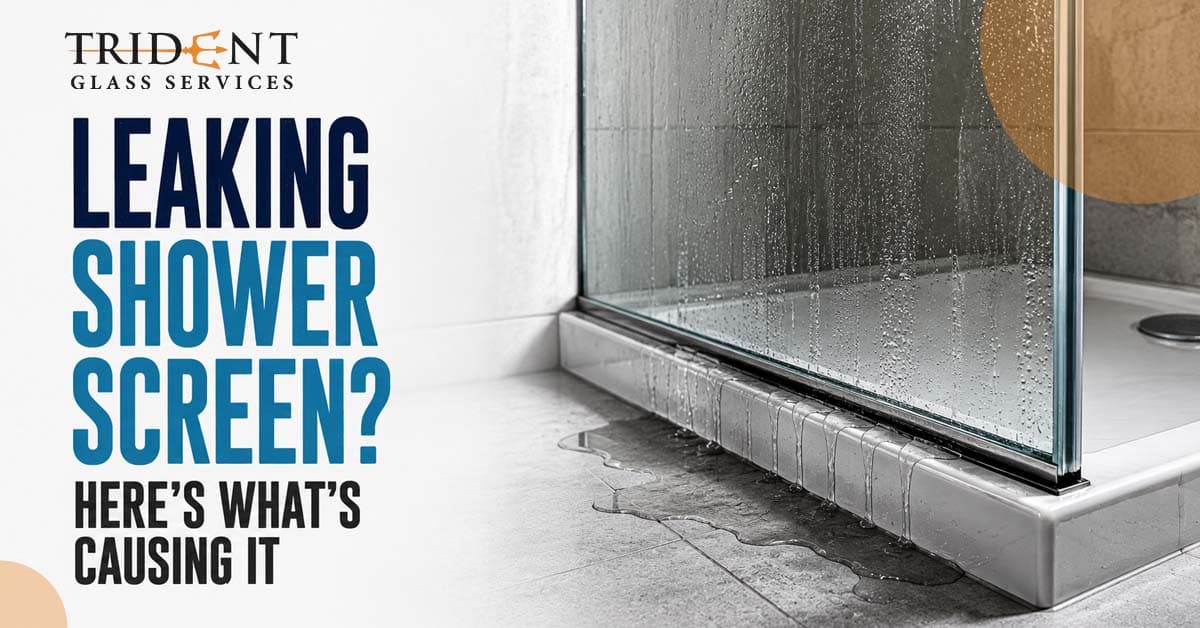
A leaking shower screen is one of those problems that are easy to ignore until damage shows up somewhere unexpected: a soft patch in the bathroom floor, water staining on the wall below, or mould along the skirting board. At Trident Glass Services, we regularly get called out to these jobs, and we find that the cause is almost always one of a small handful of issues. Most of these issues can be fixed without replacing the screen entirely, but getting the right diagnosis first is what matters. If you're noticing water escaping your shower, here's where to look. And if a full screen replacement does turn out to be the right call, our Shower Screen Replacement Sydneyteam can walk you through the options.
The Most Common Causes of Shower Screen Leaks
1. Failed or Perished Seals
This is the most common cause we find on-site. Every shower screen has seals along the bottom edge, the sides where glass meets the wall, and along the door itself. These rubber or silicone seals degrade through constant exposure to water, soap, steam, and cleaning products.
When a seal starts to pull away, shrink, crack, or go hard and brittle, it stops doing its job. Water finds the gap and works through. Re-sealing is a relatively simple fix when the glass and frame are otherwise in good condition.
Signs of seal failure to look for:
Visible gaps between the silicone and the glass or wall
Silicone that's discoloured, pulling away at the edges, or feels rigid
Mould along the seal line that keeps returning, no matter how often you clean it
Water consistently appears at a specific corner after every shower
2. Misaligned or Ill-Fitting Door
A shower screen door that doesn't sit flush when closed leaves a gap that water will find, especially with strong pressure or a wide rainfall head. Over time, hinges can loosen, the door can shift out of alignment, or the door seal can compress and fail.
Check this before assuming silicone is the problem. Close the door and look carefully around all four edges. Any visible gap is a potential leak point.
3. Cracked or Damaged Glass
People often assume a hairline crack in shower glass is a cosmetic problem. It's not. Even a small crack near a sealed edge can give water a direct path out of the recess, and it's also a safety issue that gets worse the longer it's left. Shower glass under daily heat and pressure doesn't tend to stay as a hairline for long.
Cracked shower glass needs replacing, not repairing, and should be toughened safety glass meeting AS/NZS 2208:1996.
4. Inadequate or Missing Waterproofing Behind the Walls
Sometimes the screen itself isn't the source at all. If the waterproofing membrane behind the tiles has failed, water can penetrate grout lines, travel through the substrate, and appear at the base of the screen or along the floor. This looks exactly like a screen leak but won't be fixed by resealing.
A giveaway is water appearing at a point that doesn't directly correspond to any screen edge, or outside the shower recess entirely.
5. Worn or Blocked Drain
A slow or blocked drain causes water to pool at the shower base longer than it should. In a frameless or semi-frameless screen, this pooling can push water under the bottom seal before it drains away. The screen may be perfectly sound, but retained water finds a way through.
How to Seal Shower Screen Edges Correctly
If the diagnosis points to failed silicone, getting the technique right is what determines whether the fix holds. A poorly done reseal can fail within months. A few things that matter:
Remove all old silicone completely. New silicone applied over old won't bond correctly and will fail quickly. Use a silicone remover product and a plastic scraper to get the surface fully clean.
Dry the area thoroughly. Silicone won't bond to damp surfaces. To seal shower screen joints properly, leave it unused for at least 24 hours beforehand, or dry the edges carefully with a heat gun.
Use the right product. When sealing shower screen edges, use bathroom-grade silicone with mould resistance as a minimum. Neutral-cure silicone is recommended over acetoxy-cure products, which can corrode metal frames.
Apply in a single continuous bead. Start at one end and work steadily without stopping. Tool the bead smooth with a wet finger immediately after.
Allow full cure time. Most bathroom silicones need 24 hours for surface cure and up to 72 hours for full waterproof performance. Using the shower too early is one of the most common reasons a new seal fails.
When to Call a Professional
A leaking shower screen is worth a professional assessment if:
You've resealed, and the leak returned within a few months
Water is appearing outside the expected seal locations
The door is misaligned, or the hinges feel loose
Is there any cracking in the glass, however minor
At Trident Glass Services, we carry out shower screen seal replacements, hinge adjustments, door realignment, and full screen replacements across Sydney. Our team can assess a screen leak on site, identify the actual source, and quote the repair rather than guessing at it remotely.
Final Thoughts
A leaking shower screen usually has a straightforward cause once you know where to look. Failed silicone and worn seals account for the majority of cases, and knowing how to seal shower screen joins correctly means the fix holds the first time. But if the leak keeps coming back, or if there's cracking or structural damage involved, the answer is replacement rather than another patch job. If your screen has reached that point, our Glass Repair Sydney team can assess and quote on the spot. Get in touch with Trident Glass Services for a free, no-obligation callout.