
A frameless or semi-frameless shower screen looks stunning when it's new. Six months later, without proper maintenance, it can look like no one has touched it in years. Soap scum, hard water deposits, and body oils build up faster than most people expect, and the wrong cleaning method makes things worse. At Trident Glass Services, we install shower screens across Sydney every week and get plenty of questions about how to clean a shower screen without scratching the glass or leaving smears. This guide covers what actually works, what to avoid, and how to keep the glass looking good between cleans. Getting the routine right helps you spot when the problem has moved past cleaning into replacement territory. If your screen is beyond cleaning and needs replacing, our Shower Screen Sydney team can help.
Why Shower Screens Get Dirty So Fast
Understanding what you're cleaning makes the job easier. The white haze that builds up on shower glass isn't just soap. It's a combination of:
Soap scum: fatty acids in soap that bond to glass and dry into a film
Hard water deposits: mineral residue, mainly calcium and magnesium, left behind when Sydney's tap water evaporates off the glass
Body oils and product residue: shampoo, conditioner, and body wash that doesn't fully rinse away
Mould and mildew: in corners, along seals, and in the tracks of framed screens where moisture sits
Each of these responds to slightly different treatments, which is why a single all-purpose spray often doesn't cut through everything in one pass.
Tools for a Clean Shower Screen Job
Before you start, gather the right tools. The wrong ones scratch glass or leave more residue than they remove:
White vinegar or a dedicated glass cleaner (avoid ammonia-based products on coated glass)
Bicarbonate of soda for stubborn scum
A microfibre cloth or non-scratch sponge
A squeegee
A spray bottle
Old toothbrush for tracks and seals
How to Clean a Shower Screen Step by Step
Step 1: Rinse the screen first. Run warm water over the glass to loosen surface residue. Cleaning dry glass risks grinding particles into the surface.
Step 2: Apply your cleaning solution. For everyday grime, a 50/50 mix of white vinegar and warm water works well. Spray and leave for two to three minutes. For heavier soap scum, paste some bicarbonate of soda and a little dish soap, apply with a damp cloth, and work in circular motions.
Step 3: Tackle the tracks and seals. Use the toothbrush around rubber seals and into framing channels where water sits. This is where mould takes hold first and where most people don't clean thoroughly enough.
Step 4: Rinse thoroughly. Any product left on the glass will dry, leaving its own residue. Rinse until the surface runs completely clear.
Step 5: Squeegee from top to bottom. Work from the top downward in overlapping strokes, wiping the blade between passes. Don't skip this and go straight to a cloth.
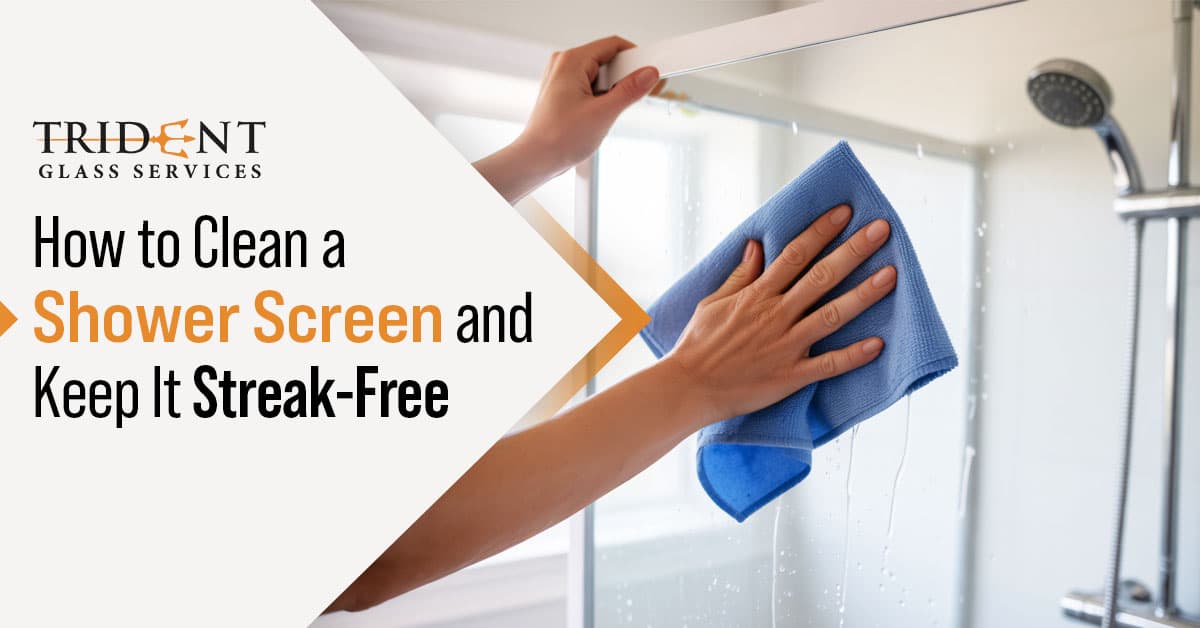
Step 6: Dry with a microfibre cloth. Buff in circular motions to pick up remaining moisture. Microfibre doesn't leave lint the way standard cloths do.
How to Keep a Clean Shower Screen Longer
Cleaning it regularly is easier than dealing with heavy build-up every time. A few habits that make a real difference:
Squeegee after every shower. It takes thirty seconds and removes the majority of water before minerals can deposit on the glass.
Leave the door or screen open after use. Airflow dries the enclosure faster and reduces mould growth on seals.
Apply a water repellent coating. Products like Rain-X or dedicated glass sealants cause water to bead and run off rather than sitting and evaporating on the surface. Reapply every few months.
Rinse the screen at the end of each shower. A quick cold rinse washes soap residue off the glass before it bonds.
Check seals regularly. Perished or lifting rubber seals let water into the frame, creating a mould problem that no amount of surface cleaning will fix.
What to Avoid
A few common mistakes that damage glass or make cleaning harder:
Steel wool or abrasive scourers. These scratch the glass surface and create micro-abrasions that trap more residue over time.
Ammonia-based cleaners on coated glass. Many modern screens have a protective coating that ammonia breaks down.
Leaving acidic cleaners on hardware. Vinegar is great on glass but will corrode chrome fittings if left sitting on them.
Cleaning a hot screen. The solution dries before you can work it, leaving more streaks than you started with.
When Cleaning Isn't Enough
Some screens have etching from years of hard water that no amount of cleaning will reverse. Etching is physical damage to the glass surface, not a coating of residue, and it leaves the glass with a permanently cloudy or patchy appearance. Professional glass polishing handles mild cases; replacement is the answer for more severe ones.
Chips, cracks, or failing seals are also worth addressing early. A cracked shower screen is a safety risk since standard glass shatters into sharp pieces, whereas toughened safety glass breaks into blunt fragments.
Final Thoughts
Now you know how to clean a shower screen properly and keep it that way, the job becomes far less of a chore with the right routine in place. A clean shower screen maintained consistently takes minutes, not an afternoon of scrubbing. And if your screen is beyond cleaning, our Glass Replacement Sydney team can assess it and recommend the best solution. Get in touch with Trident Glass Services for a free, no-obligation quote.