
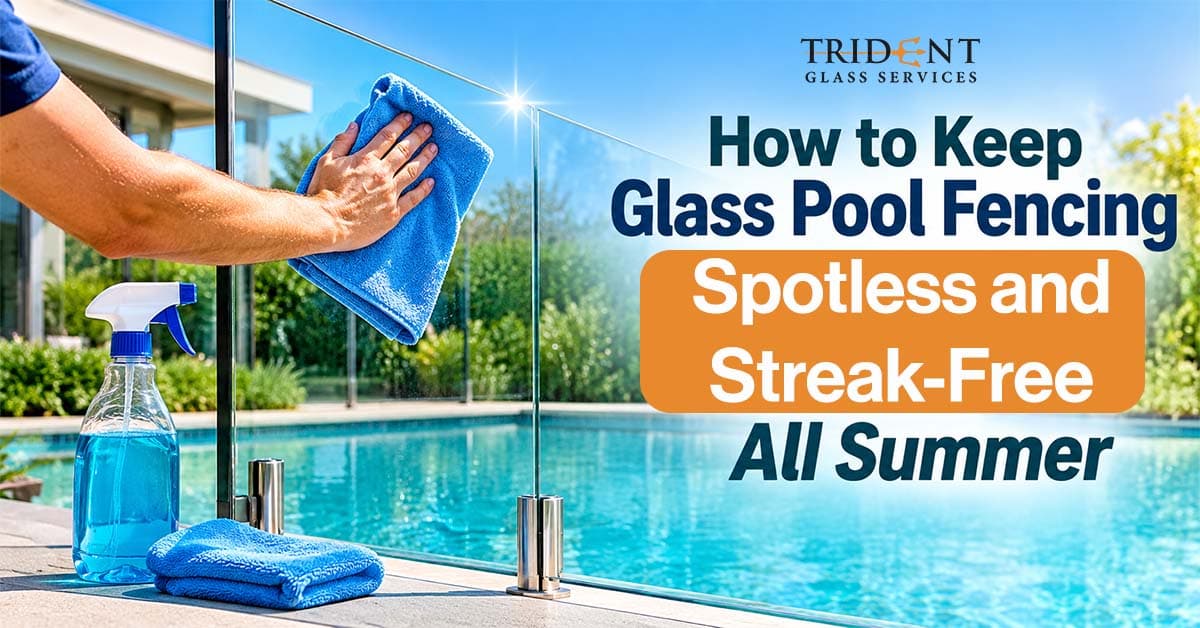
Pool water is the main source of marks on glass pool fencing. It splashes up and dries into calcium and salt rings at swimmer height, and sunscreen, coastal salt and sprinkler overspray add residue of their own. A pH-neutral cleaner and a rubber squeegee remove all of it if you work in shade, since cleaner dries on sun-warmed glass before you can wipe it. A full clean every two weeks is enough in summer. Rinse with fresh water weekly, and twice weekly near the coast. Check the gate latch on the same visit, since residue in the mechanism stops it catching and a barrier that does not latch fails compliance. When the same panel spots again within a week, the cause is usually the pool's calcium level or a sprinkler pointed at the glass, and a hydrophobic coating applied after a deep clean slows the return. This applies to any Swimming Pool Fencing Sydney homeowners rely on, new or a decade old. The marks themselves are the place to start.
What Leaves Marks on Pool Glass During a Sydney Summer
Look at a pool fence after a weekend of swimming and the marks sit in a band below one metre. That band is the splash zone. Water thrown up by swimmers dries into rings of calcium and salt residue, and sunscreen and skin oil add a greasy film across the same height wherever children lean on the barrier.
Scale from the mains tap is uncommon because Sydney water is soft. Orange or white specks higher up the panel more often trace back to a sprinkler running on bore or recycled water.
White rings below one metre are pool splash that has dried on the glass, and diluted white vinegar rinsed off with fresh water removes them. Greasy smears at hand height come from sunscreen and skin oil, which a pH-neutral cleaner lifts. Orange or brown specks higher up the panel indicate iron in irrigation water, so redirect the sprinkler heads and use a glass-safe mineral stain remover. Salt in coastal air leaves a dull haze that a fresh-water rinse clears. Soften bird droppings and pollen with water before lifting them, since dry scraping scratches the glass.
Tools and Cleaners That Protect Toughened Glass
Pool barriers use 10 mm or 12 mm toughened glass. It scratches as easily as any other glass, and polishing a scratch distorts the panel, so avoiding the scratch is the only fix.
A pH-neutral glass cleaner does the work, and warm water with a few drops of dishwashing liquid is an acceptable substitute. Two microfibre cloths, one wet and one dry, cover the wiping, and either should be replaced once it feels gritty because trapped grit scratches under pressure. A 30 cm rubber squeegee with an undamaged blade handles the finish.
Some products damage the barrier:
Scourers, steel wool and razor scrapers scratch the glass face.
Bleach and acid descalers corrode stainless steel fittings, including spigot caps.
A pressure washer aimed at the panel base can force water into the fixing and split the silicone.
A Step-by-Step Method for a Streak-Free Finish
Cleaner dries on warm glass before you can wipe it, and the residue sets as streaks. Early morning or after 4 pm avoids that.
Hose each panel from top to bottom first. Grit left on the surface scratches under the cloth.
A wet microfibre cloth and a light mist of cleaner go on next. Too much product causes more streaking than any other mistake.
Squeegee in one continuous downward pull, overlap the previous pass by a few centimetres, and wipe the blade after every stroke.
The bottom edge and the area around each spigot collect water and leave a tide line, so dry them with the second cloth.
Look at the panel from an angle before moving on. Streaks that vanish head-on often show in low afternoon light, and the dry cloth removes them in seconds.
Cleaning Schedule for Sydney Pool Fences
Rinse the panels with fresh water weekly, and twice weekly near the coast. A full squeegee clean every two weeks carries the fence through summer, with an extra one after school holidays. Each month, wipe the hardware and check the gate's caps, hinges and latch spring. A deep clean every three months removes mineral spotting while it is still easy to treat, and a protective coating needs reapplying every 6 to 12 months, depending on the product label.
Caring for Spigots, Seals and the Self-Closing Gate
Marine-grade 316 stainless steel resists corrosion but still shows tea staining where chlorine and salt sit. Rinse spigots with fresh water, wipe them dry, and apply a stainless steel cleaner made for marine grade. Keep chlorine-based products off fittings.
The gate needs the most attention. A silicone-based lubricant on the hinges keeps the self-closing action consistent, whereas oil-based sprays collect dust and leave dark marks on the glass. Open the gate fully, release it, and confirm it closes and latches without help. A latch clogged with dried residue fails this test more often than a worn spring does.
Trident Glass Services has fitted and repaired pool barriers for more than 14 years, and loose spigot caps, worn hinges and sticky latches are the faults that appear most often during service visits. Whether your panels came from a Glass Fencing Warehouse Sydney supplier or were fabricated to order, care depends on the glass thickness and hardware finish, not on where the panels were bought.
Keep the 900 mm non-climbable zone around the barrier clear while you clean. Pots, chairs and bins moved against the glass create a climbing point.
Protective Coatings and Repeat Spotting
A hydrophobic coating applied to fully clean, dry glass makes water form beads that roll off, which cuts both spotting and cleaning time. Apply it after a deep clean only, since coating over residue seals the marks in.
Spots that return in the same place within a week have a cause outside the glass. Check your pool's calcium hardness and pH, look at where sprinklers throw water, and note whether a water feature or a heavy swimming area sits opposite that panel.