
Drowning is one of the leading causes of preventable death in young children, and a compliant pool barrier is the single biggest factor in preventing it. That's why NSW treats pool fencing as a legal requirement rather than a design preference and why getting it wrong can mean fines, failed inspections, or a council order to rebuild the whole thing. If you're researching pool fencing Sydney options for a new build or a renovation, understanding the actual rules first will save a lot of back-and-forth with installers and certifiers later.
Why NSW takes this so seriously
Every pool and spa in NSW capable of holding more than 300mm of water, including portable and inflatable ones, falls under the Swimming Pools Act 1992 and the current Australian Standard AS1926.1-2012. The barrier must be registered on the NSW Swimming Pool Register, and a Certificate of Compliance is required before the pool can be legally used or the property sold or leased.
A newer version of the standard, AS1926.1:2024, was published in 2024, but it isn't yet the version certifiers use to assess compliance in NSW. Anyone planning a fence right now still needs to build to the 2012 standard, and it's worth checking with a licensed installer rather than assuming the newest published document automatically applies.
The numbers that actually matter
Most compliance failures come down to a handful of measurements, and they're worth knowing before you start pricing anything.
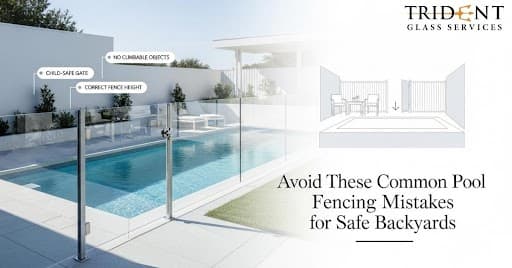
A barrier must be at least 1200mm high, measured from the finished ground level. Where a boundary fence forms part of the barrier, that height requirement jumps to 1800mm. The gap between the bottom of the fence and the ground can't exceed 100mm, and the same 100mm limit applies to gaps between vertical bars. Gates have their own set of rules: they must swing away from the pool, close completely on their own from any open position, and self-latch with the latch positioned at least 1500mm above ground.
Then there's the non-climbable zone, often shortened to NCZ. This is a 900mm clearance measured horizontally from the outside of the barrier, and it must remain free of anything that could give a child a foothold, such as pot plants, outdoor furniture, barbecues, or even low-growing trees. branches. It's one of the most commonly overlooked rules, mostly because it has nothing to do with the fence itself and everything to do with what's sitting near it. Inspectors specifically check for this during reassessments, and it's often the reason an otherwise compliant fence fails a routine check years after it was first certified.
Where glass pool fencing fits into the rules
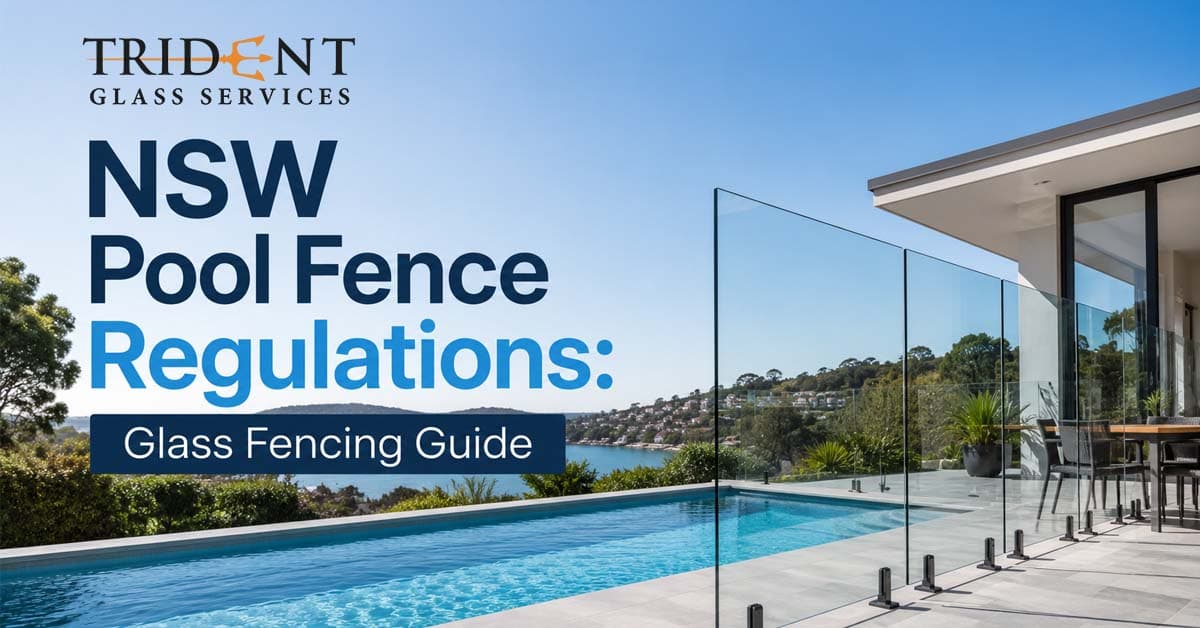
Glass pool fencing meets these requirements just as well as metal or mesh fencing, provided the glass is toughened safety glass of the correct thickness. Frameless systems typically use 12mm glass held by discreet spigots at the base, since there's no frame to share the structural load. Semi-frameless designs can sometimes use slightly thinner glass because the posts bear some of the load.
The appeal beyond compliance is fairly obvious. Glass fencing keeps the pool visible from the house, which matters more than people expect when supervising kids, since a solid timber or brick barrier blocks exactly the sightline you actually want. It also doesn't corrode the way some metal fittings can over the years of chlorine and weather exposure, which keeps maintenance fairly minimal once it's installed correctly. For coastal Sydney properties in particular, that resistance to salt air and pool chemicals tends to matter more over a decade than the upfront price difference.
Mistakes that show up during inspections
A few issues come up again and again when older barriers get reassessed:
Plants or furniture have crept into the non-climbable zone over time, often without the owner noticing.
Gates have been propped open, or the self-closing mechanism has worn out and stopped engaging properly.
Older pools still use a window or door as part of the barrier, which was permitted under earlier standards but is no longer allowed once the barrier is altered or rebuilt.
The compliance certificate has simply expired. Rental properties need recertification every three years, and it's easy to lose track of the date.
Any renovation, including changes to landscaping near the pool, can trigger a full reassessment against the current standard, so it's worth checking the fence again whenever other work happens in the yard.
Getting it right the first time
Glass fencing has become one of the more popular choices for NSW pools precisely because it solves the visibility and aesthetic trade-offs that older barrier styles struggled with, without sacrificing compliance. The cost is usually higher upfront than aluminium or mesh, but for many homeowners, the unobstructed view and lower long-term maintenance make up the difference.
If you're working through a build or renovation, it's worth having a licensed glazier walk the site before anything is ordered, since exact measurements and ground levels affect which glass pool fencing configuration will actually pass inspection. And the same compliance logic holds regardless of postcode. Anyone weighing up swimming pool fencing Perthoptions will run into a similar set of barrier, gate, and clearance rules under WA's own building codes, even though the specific numbers can differ from state to state.