
Renovating a bathroom usually involves a few key decisions, and the shower screen is one that most people overlook until they are in a showroom comparing samples. The choice between framed and frameless options changes the look of the room, the maintenance involved, and the budget, often by a fair margin. If you've searched for frameless shower screen Sydney options recently, you've probably already noticed how different the quotes can be depending on which style you ask about. Here's what actually separates the two and how to figure out which one fits your bathroom.
What are framed shower screens?
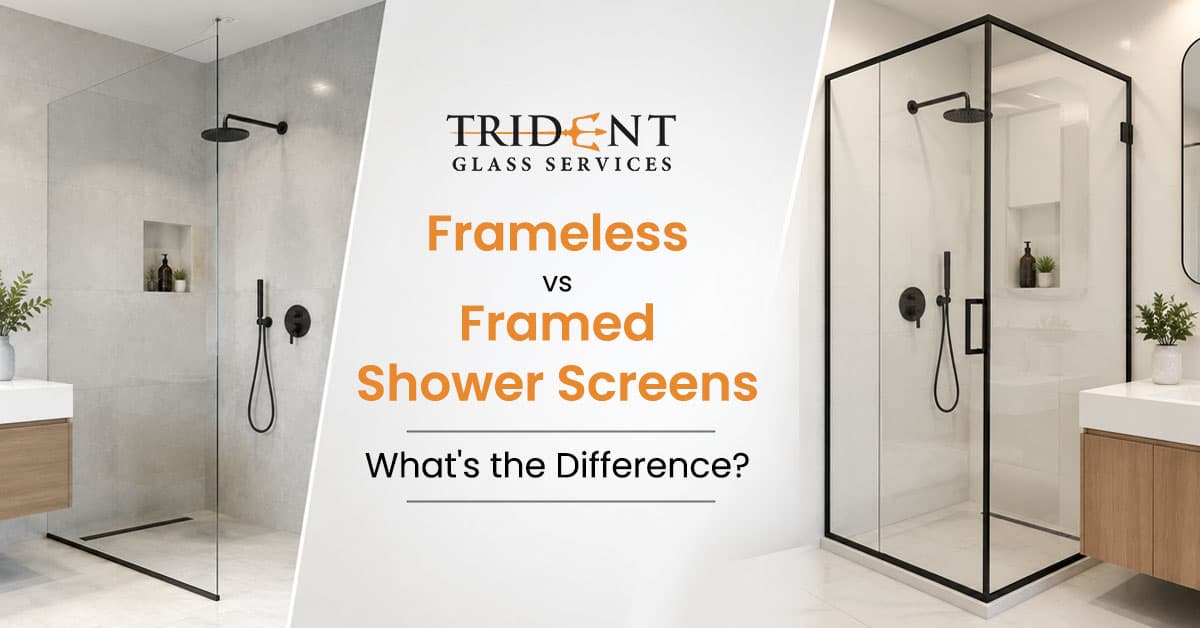
Framed shower screens use a metal frame, usually aluminium, running around the edges of the glass panels. The frame holds everything together and takes most of the structural weight, which means the glass itself doesn't need to be as thick, typically sitting around 4 to 6mm.
That frame also comes in a range of finishes, chrome, matte black, and brushed nickel, so it's easy to match against taps and other bathroom fittings. The main appeal for most homeowners is the price: a standard wall-mounted setup generally costs between $500 and $1,000, making it the more budget-friendly option. The trade-off shows up in upkeep, since the frame's corners can trap soap scum and moisture, calling for a slightly more regular wipe-down to keep mould from creeping in along the seals. Repairs, at least, tend to be straightforward, since a damaged hinge or seal can usually be swapped out without replacing the whole panel.
What are frameless shower screens?
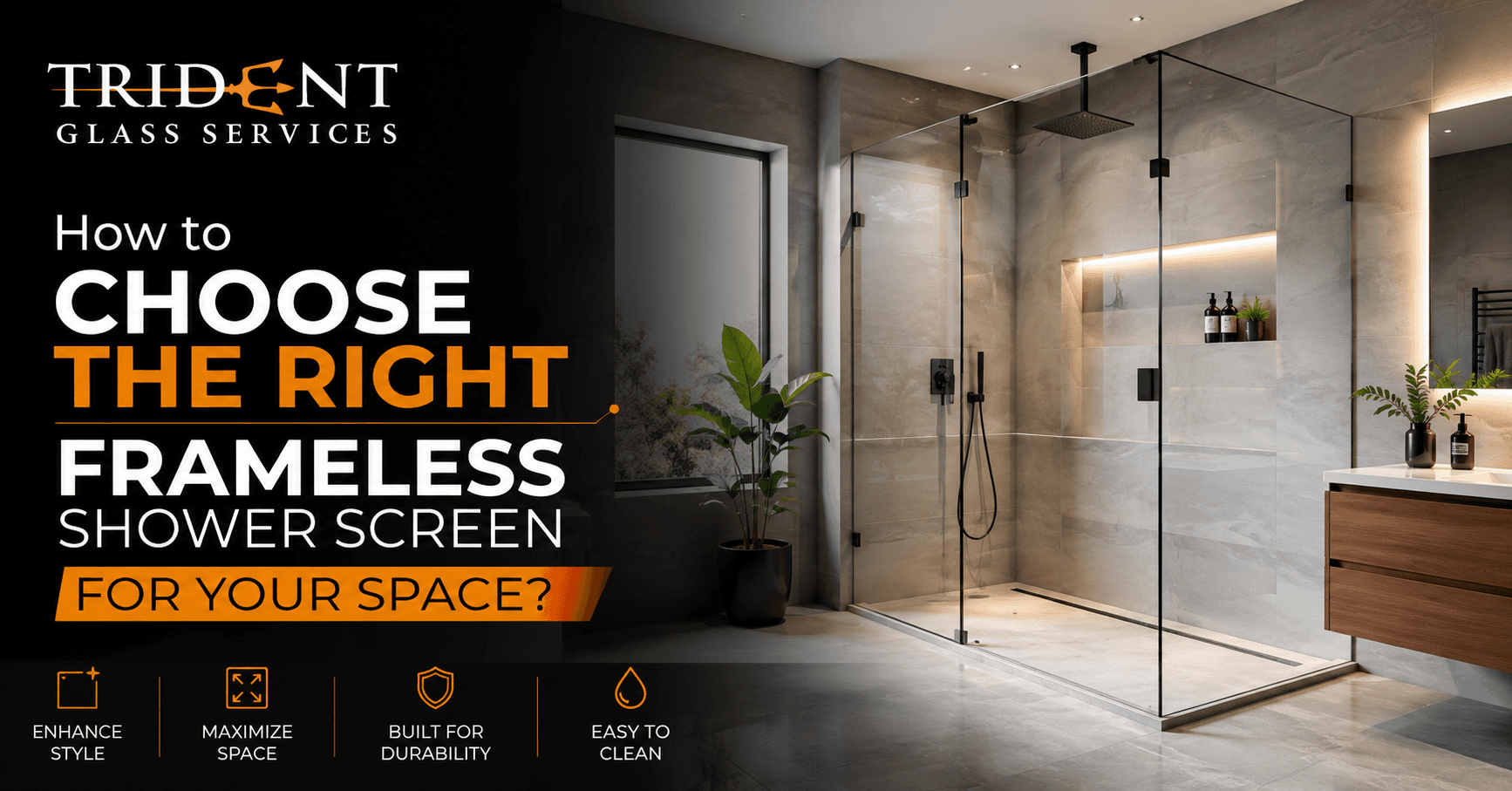
Frameless shower screens skip the metal edging entirely, relying instead on thicker toughened glass, usually 10mm or more, along with discreet clips and hinges to hold everything in place.
Some practical points on this option:
The glass needs to be considerably thicker to stay rigid without a frame, which is the main reason these cost more.
There's no metal edging to collect grime, so cleaning is generally faster and mould has fewer places to take hold.
The unbroken glass panels create a more open, seamless look, which is part of why frameless designs have become so popular in smaller Sydney bathrooms where every bit of visual space matters.
Installation needs to be precise, since there's no frame to disguise a slightly uneven fit.
Where the real differences show up
Cost is the most obvious difference, but not the only one that matters in daily use.
Price is usually the first question, and framed screens come out cheaper almost every time, often by several hundred dollars depending on size. Part of that gap comes down to glass weight: frameless designs need much thicker panels to stand up without a metal edge holding them in place, which is also why a frameless screen feels noticeably heavier and more substantial when you push the door open.
Cleaning tends to surprise people who haven't lived with either style. Wipe down a frameless screen and you're done in a minute, since there's nothing for soap residue to catch on. A framed screen needs a bit more attention along the metal edges, where grime can build up in corners that are awkward to reach.
Visually, a frame breaks up the glass with visible lines, which can read as slightly busy in a tight space, while an unbroken sheet of frameless glass tends to make the same bathroom look a touch larger. Both styles hold up well for years when installed properly, though framed screens occasionally need the frame replaced down the track if the metal corrodes, which is more common in homes near the coast.
There's also a middle option worth mentioning. Semi-frameless screens use minimal edging, usually just along the door, and split the difference in both price and maintenance. They're worth a look if neither fully framed nor fully frameless feels right.
Which one actually makes sense for your bathroom
If the budget is the main concern, the framed option usually wins out, and it still holds up well for years with reasonable upkeep. It's also a sensible choice for larger family bathrooms that see heavy daily use, since the frame adds a bit of extra resilience against knocks.
Frameless shower screens make more sense when the bathroom is smaller, when the budget has some room to move, or when the goal is a sleeker finish that adds resale appeal. Plenty of renovators choose frameless purely because it makes a compact ensuite feel noticeably bigger.
Climate is worth a thought, too. Coastal humidity and frequent use can be harder on metal frames over time, which is part of why frameless ends up being the lower-maintenance choice long term in some areas, even with the higher upfront cost.
Getting the right fit either way
Whichever style ends up suiting your space, getting the measurements and installation right matters more than the style choice itself. A poorly fitted frameless screen will leak just as easily as a poorly fitted framed one, and a rushed installation can undo the benefits of either option. If you're weighing up the two options and want a second opinion based on your actual bathroom layout, it's worth getting measurements taken before committing either way. And if you're based further west, the same comparison applies just as much for anyone exploring shower screen Perth options, since the climate and space considerations there can tip the decision in a different direction.