
Most people never think about the standard behind the glass in their home until something goes wrong, a panel shatters unexpectedly, a balustrade doesn't feel quite as sturdy as it should, or a builder mentions a certificate they can't quite explain. If you've searched for glass replacement Sydney recently, chances are you've come across the term AS 1288 somewhere along the way, usually without a clear explanation of what it actually means for your job.
Let's break it down properly and learn about the AS 1288 glass standard, in plain language, the way we'd walk you through it on site.
AS 1288 Isn't Just Paperwork
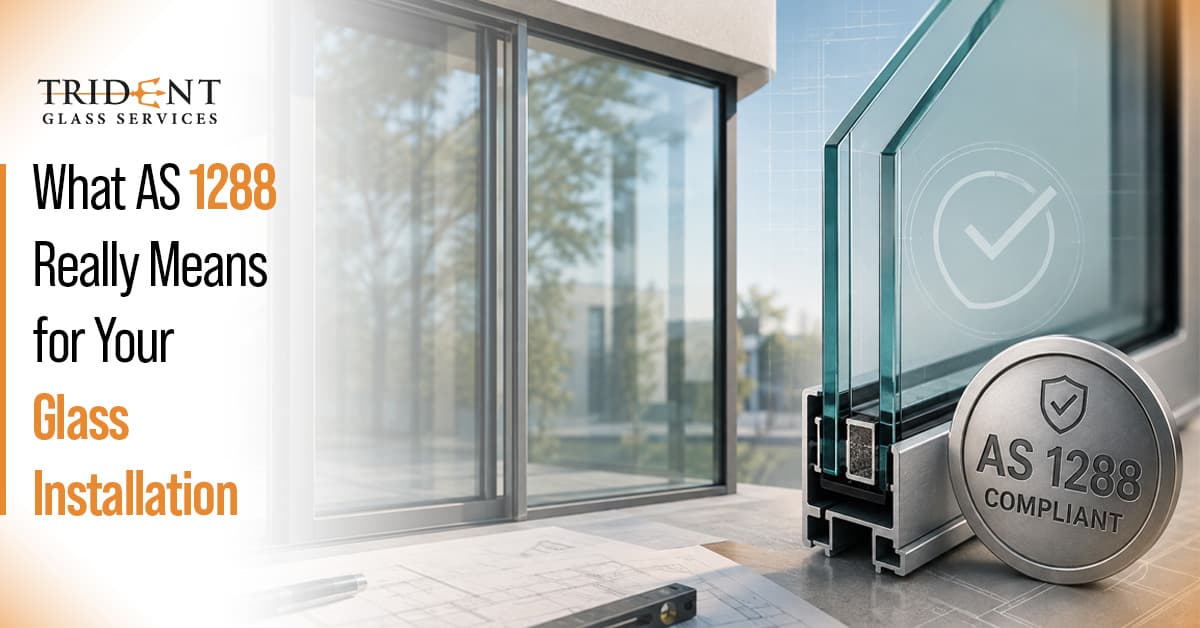
AS 1288 is the primary standard covering how glass gets selected and installed in buildings, from a kitchen window to a full glass balustrade on a second storey balcony. It's not a box ticking exercise, it determines whether the glass above your head,beside your shower, or holding up your staircase actually meets the Australian glass standards for where it's going.
The AS 1288 glass standard was last updated in 2021, tying into the National Construction Code, so builders, architects, and glaziers work off the same rulebook. Ignore it, and you risk someone walking into glass never designed to handle human impact.
What the Standard Actually Covers
Here's where a lot of people get lost, because the AS 1288 glass standard doesn't just say "use strong glass." It gets specific about several different risk factors that most homeowners never consider:
Wind loading, how much force glass must withstand based on size, location, and exposure
Human impact, whether glass in doors, low windows, and high traffic areas needs toughening or lamination rather than standard annealed glass
Special applications, including overhead glazing, balustrades, and pool fencing, which carry stricter requirements given the consequences of failure
Edge clearances and fixing methods, since even the right glass can fail if installed incorrectly
Glass strength calculations based on the actual tensile stress the surface will face once installed
This is why the AS 1288 glass standard exists as a single reference point, so builders and glaziers aren't guessing, the last thing you want is holding up a floor to ceiling window three storeys up.
Where This Actually Matters to You as a Homeowner
If you're renovating, replacing a broken window, or adding a shower screen or balustrade, the Australian glass standards shape what your glazier should recommend, not just what looks good in the showroom.
A few real world examples of how the Australian glass standards change what gets used:
Glass doors and side panels near doors almost always need toughened safety glass, since it's up to five times stronger than standard glass and, unlike ordinary glass, shatters into small, blunt pieces on impact rather than dangerous shards
Glass balustrades on balconies or stairs need specific thickness and fixing methods based on height and expected load
Overhead glazing, like skylights or glass roofing, has some of the strictest requirements in the whole standard, for obvious reasons
Wet areas like bathrooms and pool surrounds have their own specific glass requirements under the Australian glass standards, separate from general window glazing, and typically need to carry AS/NZS 2208:1996 safety glazing certification on top of AS 1288 compliance
None of this is optional, and a licensed glazier should be able to explain why a particular glass type was chosen for your job, not just quote a price and move on.
What Happens When Glass Isn't Installed to Standard
We've walked into jobs where the previous installation wasn't done with the Australian glass standards in mind, glass too thin for its size, missing edge clearances, or safety glass in the wrong spot. Other times it only becomes clear once something breaks.
Beyond the safety risk, non compliant glass can cause headaches if you sell your property or make an insurance claim, since inspectors do check for this. Getting it right the first time, in line with the Australian glass standards, saves people money and stress down the track.
Why This Is Where Experience Actually Counts
With more than 14 years in the trade, our team has seen every version of what happens when AS 1288 gets ignored, and what proper compliance looks like across different jobs, from a single cracked window to a full commercial fit out. We source our glass in house from Australian certified suppliers, and check every panel for compliance before it goes anywhere near your home.
Every installation we carry out is measured against the AS 1288 glass standard as a baseline. If your glass is showing cracks, chips, or wear and you're unsure whether it still meets standard, it's worth getting it looked at properly rather than waiting for a problem to force the issue.
Whether you need a full panel swapped out or a straightforward fix, our team handles glass repair Sydney jobs with the same standard in mind every time, because a job that looks fine on the surface isn't worth much if it wasn't done right underneath.