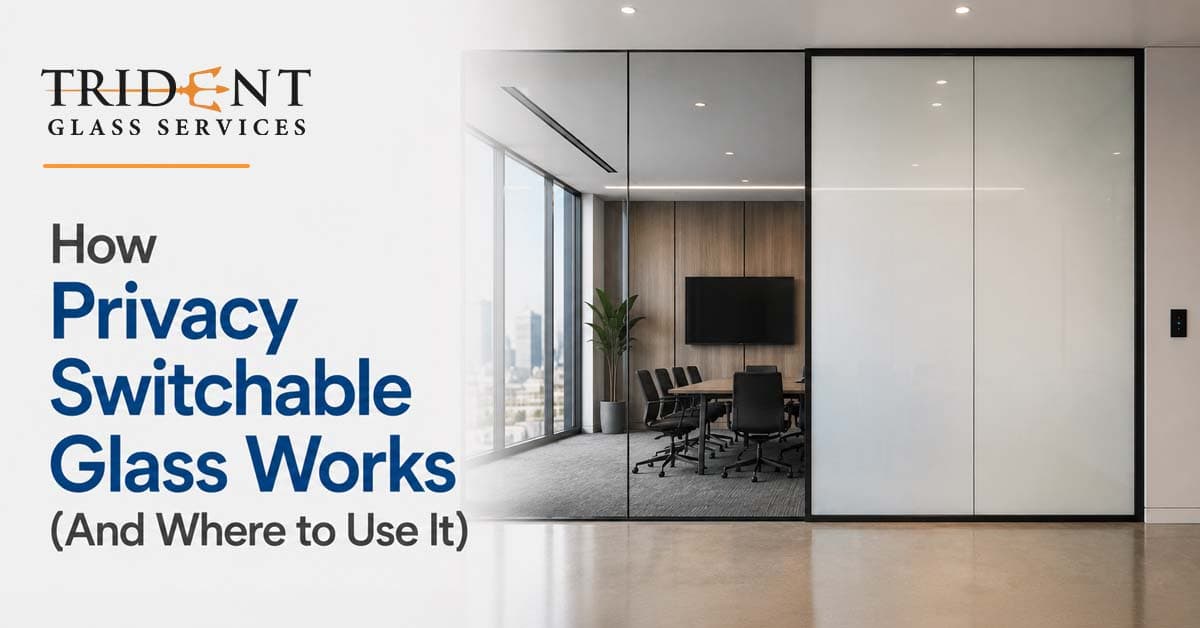

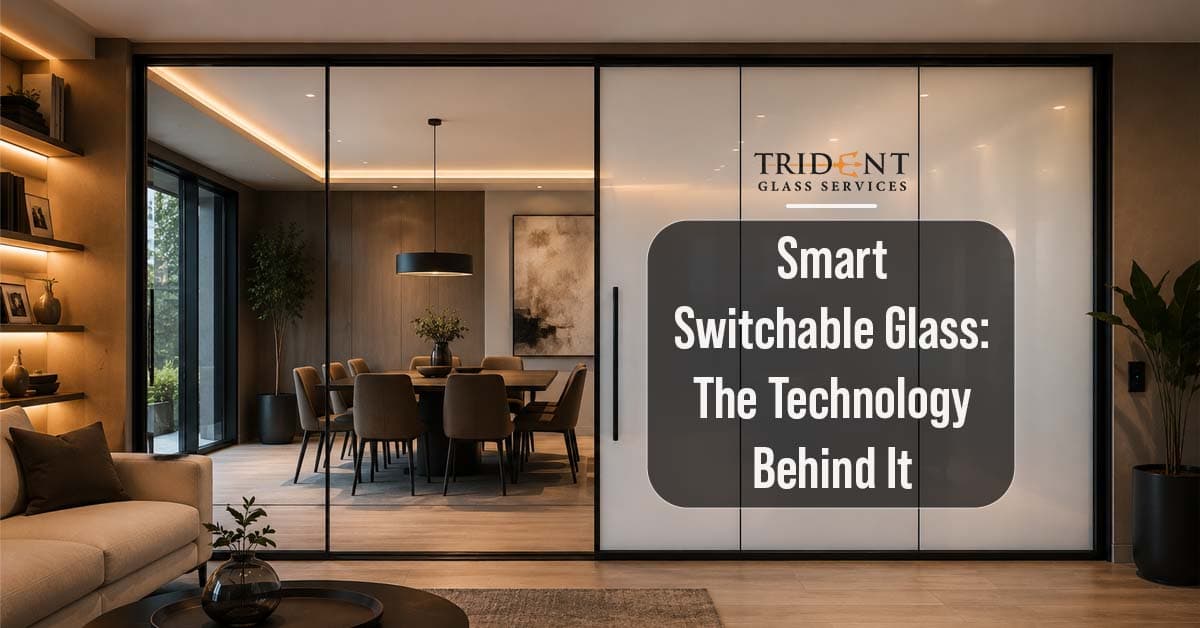
Most people first encounter this technology in an office meeting room or a hospital suite and assume it's reserved for high-end commercial builds. It's not. The technology has become far more accessible over the past few years, and we're now fitting it in Sydney homes and mid-size offices as often as corporate fit-outs. At Trident Glass Services, we offer a full range of switchable glass products across residential and commercial projects, and we've seen first-hand how quickly it shifts from "That's impressive" to "I can't believe we ever used blinds." If you're already thinking about how it fits into an office layout, our Glass Office Partitions Sydney team can talk you through the options.
What Makes It "Smart"
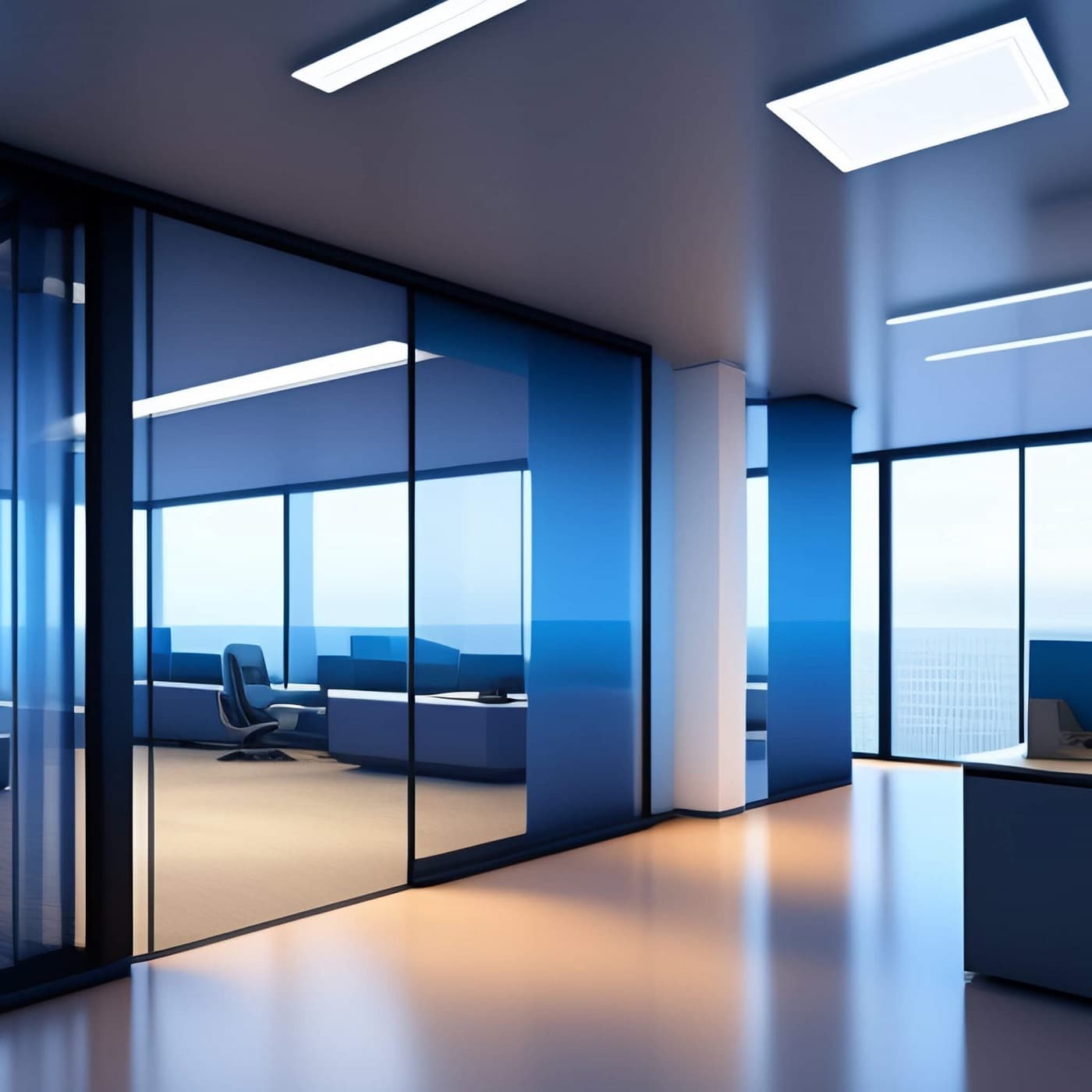
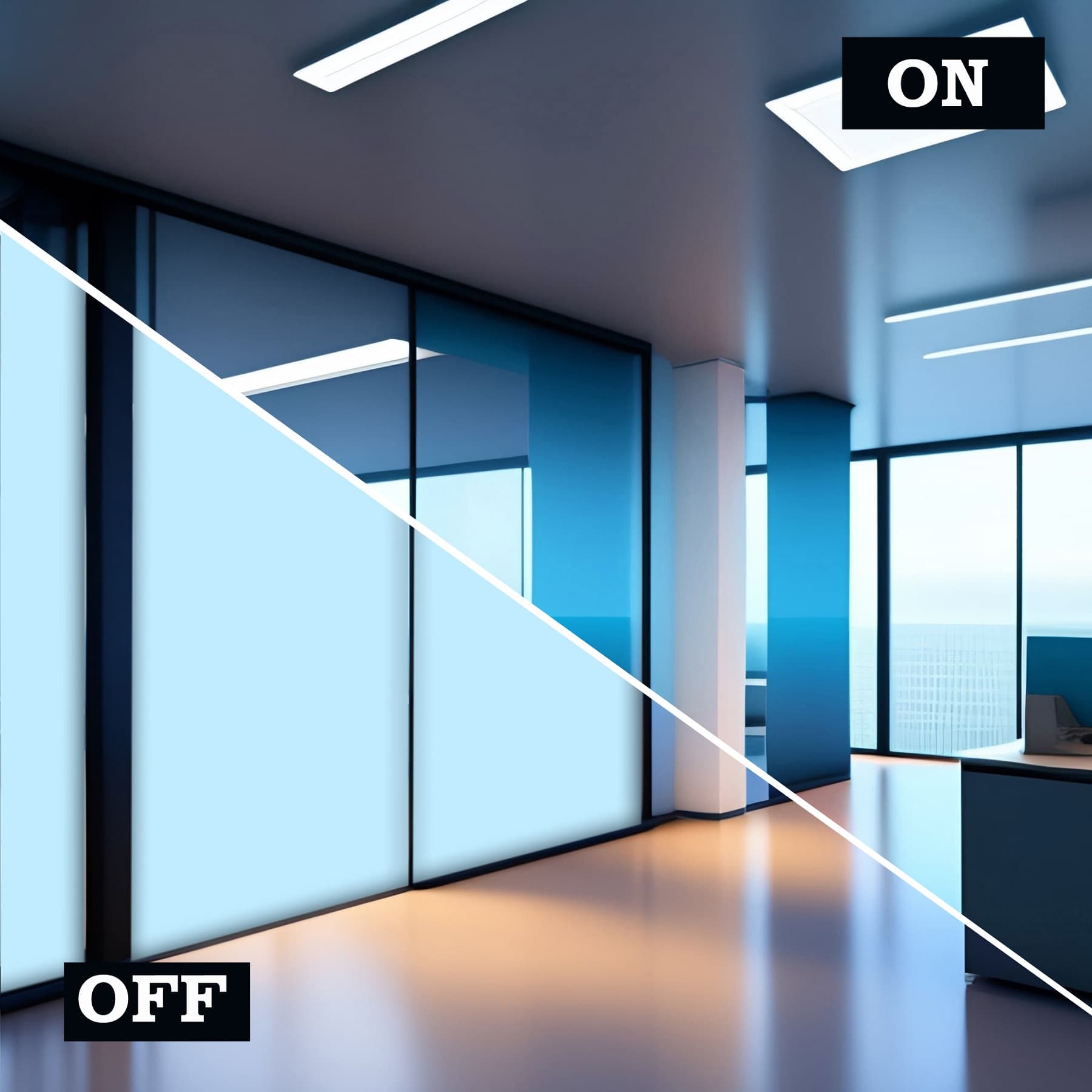
The term is used loosely, but when glaziers talk about switchable glass, they're referring specifically to glass that changes its light-transmission properties on demand using an electrical signal. It's not tinted. It's not frosted. It's a panel that can genuinely change from one state to another in under a second.
The core technology is PDLC: polymer-dispersed liquid crystal. A thin film containing liquid crystals sits laminated inside the glass. Off-state, the crystals point every which way and scatter light, making the panel look opaque. Apply a current, and they snap into alignment, letting light through cleanly.
What makes this useful rather than just clever is the control side. The glass can be operated by a standard wall switch, a remote, a phone app, or integrated into a building management system to respond to occupancy sensors, scheduled times, or voice control. The glass itself is passive. The intelligence sits in how you choose to trigger it.
Smart Switchable Glass Film vs Integral Glass Units
This is usually the first practical decision a project faces, and it's worth getting right early on.
Smart switchable glass film is a retrofit product. The PDLC layer is applied directly to an existing glass surface, bonded with adhesive, and wired to a power source. It's a cheaper entry point, works well on flat surfaces, and suits situations where the existing glass is structurally sound, and the goal is simply to add switchable privacy without a full replacement.
The limitations are real. The film version doesn't switch as cleanly as integral units, off-state opacity is slightly less uniform, and adhesion in high-humidity environments like bathrooms can become an issue over time. This option is suitable for many retrofits, but not all.
Integral glass units have the PDLC layer laminated directly between two glass panes during manufacture. The result is a more uniform switch, a cleaner finish, better durability, and a panel that's fully weatherproof and suited to external-facing applications. It costs more, but for new builds, major fit-outs, or anywhere the glass will be exposed to steam, moisture, or long-term heavy use, it's the smarter investment.
Where the Technology Actually Makes a Difference
Not every space justifies the cost of switchable glass, but a few keep coming up where it earns its place quickly:
Boardrooms and meeting rooms where a switchable glass film or integral panel gives open visibility most of the time but instant privacy when it counts
Ensuite and bathroom windows that face a neighbour or a shared space, where permanent frosting blocks too much light and blinds are impractical in a wet area
GP and specialist consulting rooms where patient privacy needs to switch on and off without physical screens
Residential open-plan spaces where a glass wall between living and bedroom zones can open up or close off without structural changes
Reception areas and shopfronts where the glass can go opaque after hours or double as a projection screen for displays
A Few Things Worth Knowing Before You Commit
Some questions that come up in most consultations:
What happens if the power goes out? The glass defaults to opaque. The crystals scatter without a current, so privacy is maintained automatically during an outage.
Is the film version DIY-able? Technically, yes, but the wiring, power supply sizing, and sealing around edges need to be done properly to avoid failure points. Worth getting a professional to do the final install, even if the product itself is off-the-shelf.
Does it affect UV transmission? In the clear state, standard PDLC glass still blocks a portion of UV. If UV protection is a priority, specify a Low-E coating alongside the switchable layer.
Can it be double-glazed? Yes. The switchable layer can be incorporated into double-glazed units, which matters for thermal performance on external windows.
Why Sydney Properties Choose Trident Glass Services
Trident Glass Services has been supplying and fitting switchable glass across Sydney for over 14 years. We carry both integral glass units and smart switchable glass film options, and we'll tell you upfront which one suits your specific situation rather than defaulting to the pricier product. Our team is NSW-licensed, all installations meet Australian standards, and every project starts with a free measurement and quote.
Final Thoughts
This technology is one of the few glazing products that genuinely changes how people use a space, not just how it looks. Whether you're starting with a smart switchable glass film on an existing window or commissioning integral units across a full office fit-out, getting the product specification right for the application is what separates a system that performs well for years from one that causes headaches six months in. If the project also involves cracked, damaged, or ageing glass elsewhere in the property, our Glass Repair Sydney team can assess and quote everything in a single visit. Get in touch with Trident Glass Services for a free, no-obligation consultation.