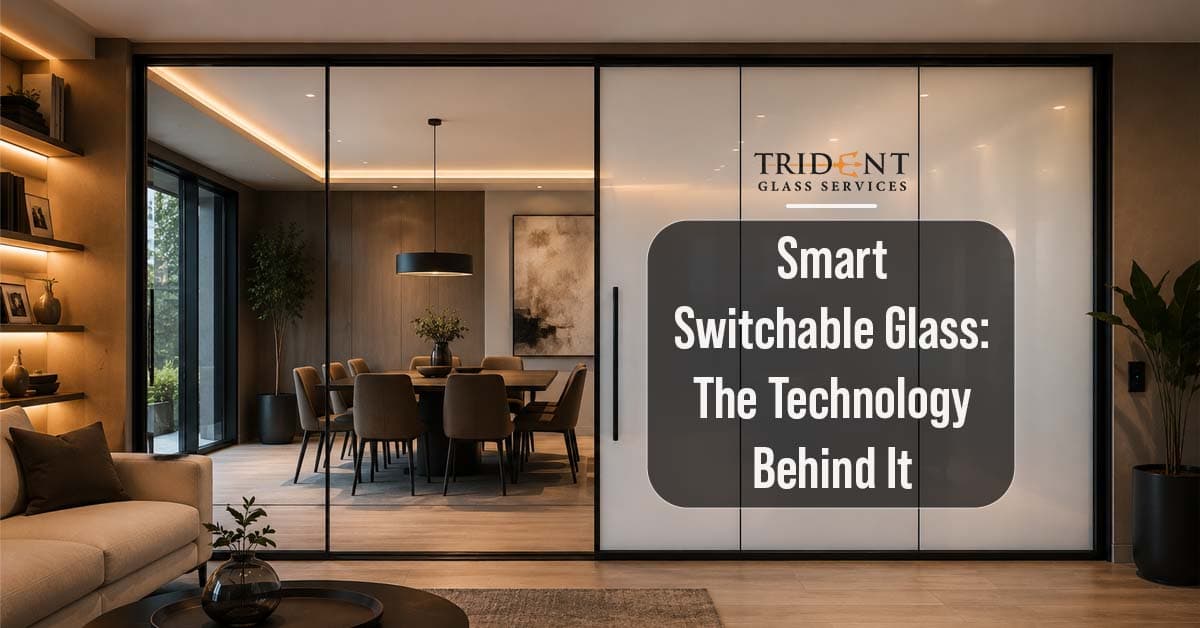

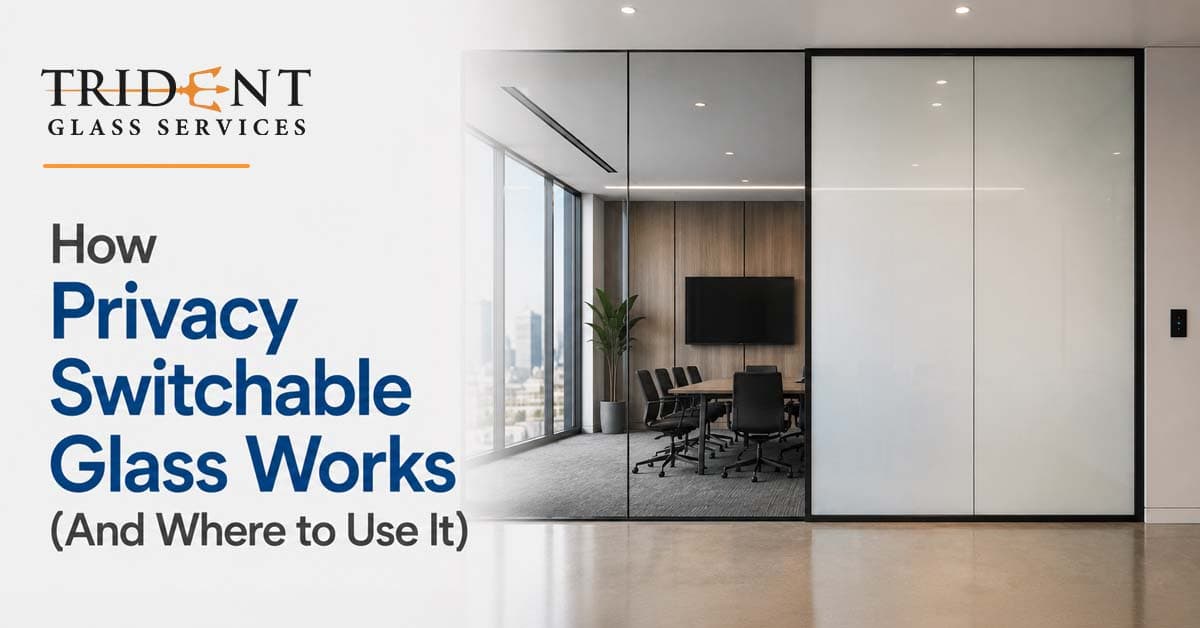
If you've ever walked past a meeting room that went from clear to frosted at the flick of a switch, you've seen privacy switchable glass in action. It's one of the cleverest things to happen in glazing in the past decade, and it's appearing in more Sydney homes and offices than most people realise. At Trident Glass Services, we supply and install switchable glass across residential and commercial projects throughout Sydney, and the questions we get most often aren't about price; they're about how it actually works and where it makes sense to use it. That's what this guide covers. And if your space already has glass partitions that need upgrading or replacing, our Glass Partitions Sydney team can assess the existing partitions before you commit to anything new.
How Privacy Switchable Glass Actually Works
The technology behind this type of smart glass is called PDLC: Polymer Dispersed Liquid Crystal. It sounds complicated, but the principle is straightforward.
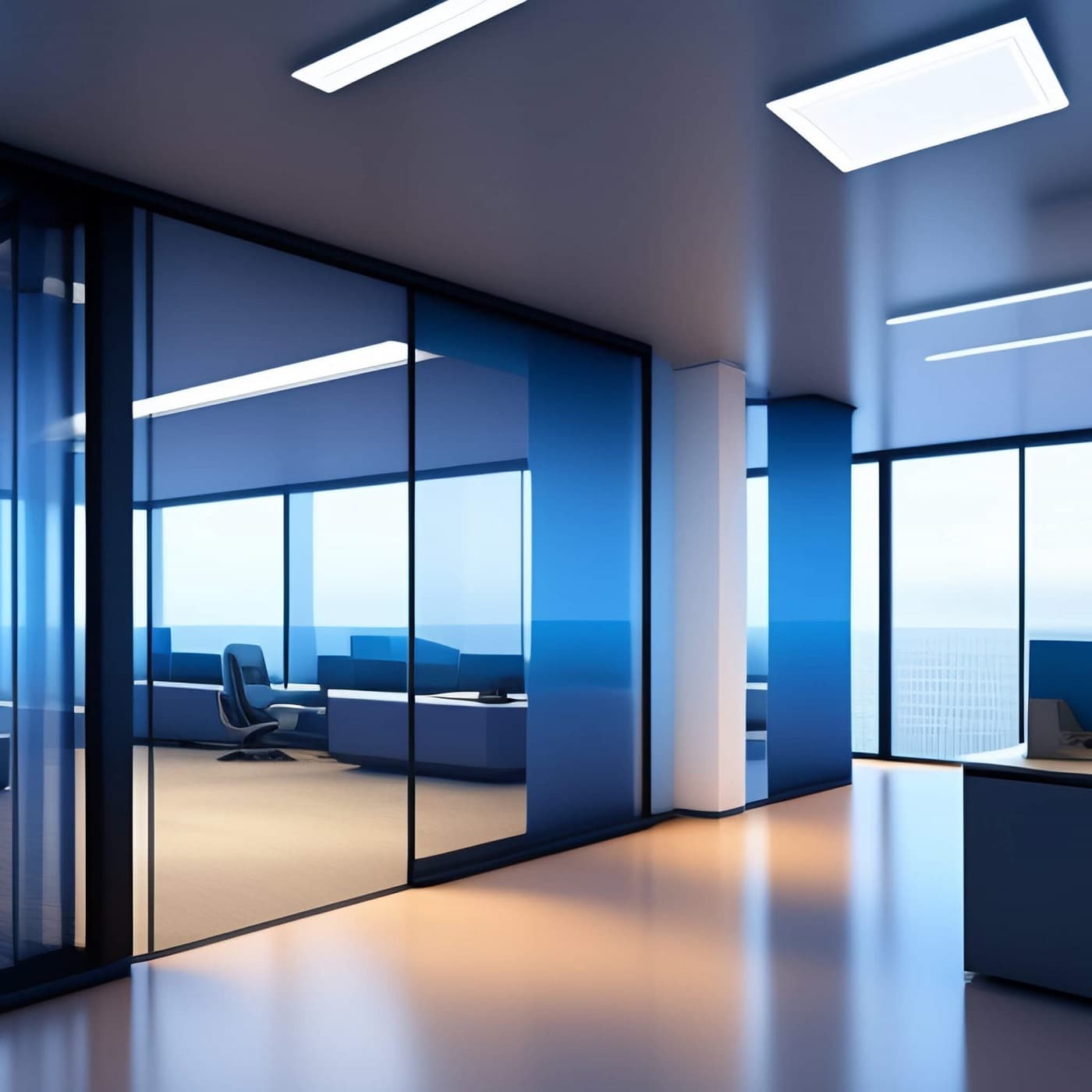
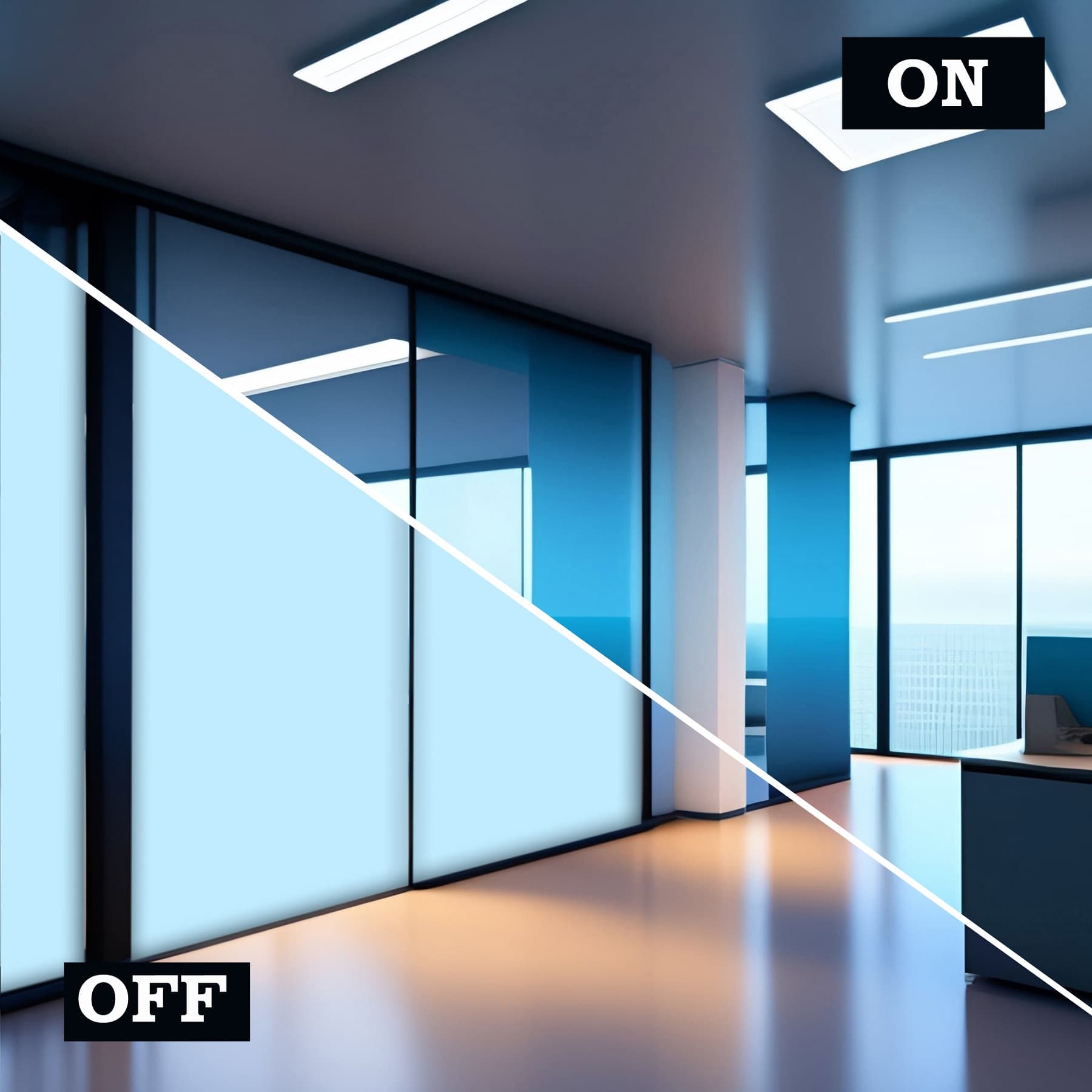
Inside the glass sits a thin PDLC film. Without power running through it, the liquid crystals inside that film point in all directions at once, scattering light and making the panel look frosted. Switch the current on, and they line up, letting light pass straight through. Clear. The whole thing happens in under a second.
There's nothing mechanical about it. No tracks, no blinds, no motor to service. Most systems run on low-voltage power and can be wired to a standard wall switch, tied to a remote or an app, or integrated into a broader building automation setup if that's already in place.
What Are Switchable Glass Windows?
Switchable glass windows work on the same PDLC principle but are designed specifically for external-facing or internal window applications rather than partition walls or doors. They're particularly useful where:
A window faces a neighbouring property, and privacy is needed without blocking natural light permanently
A bathroom or en-suite has a window in an awkward position that's hard to screen with a blind
A bedroom or home office window needs to double as a privacy screen without curtains
A skylight or roof window needs occasional light diffusion without losing the daylight benefit
Switchable glass windows can be retrofitted with a film applied to existing glass in some cases or installed as new units with the PDLC layer built directly into the panel.
Where Switchable Glass Works Best
Not every room needs it, and that's fine. But a few situations come up where it solves a problem that nothing else quite handles as neatly:
Boardrooms and meeting rooms. Clear when not in use so the space feels open. Opaque the moment the meeting starts. No blinds to manage, no curtains to date the fit-out.
Bathroom and ensuite windows. Natural light in, no compromising views out. Particularly useful for ground-floor bathrooms where permanent frosting feels too closed-in.
Glass-walled offices. Executive spaces or HR rooms that need visible openness usually but instant privacy for sensitive conversations.
Residential open-plan living. Switchable panels between living and sleeping zones let the floor plan feel open during the day and private at night.
Medical and clinical spaces. Hospitals and consulting rooms benefit from the ability to shift between open observation and private consultation without physical screens.
Retail and hospitality. Display windows that turn opaque outside trading hours, or private dining spaces that open up or close off depending on the booking.
Practical Things Worth Knowing Before You Install
A few questions that come up in most of our conversations:
Does it use a lot of power? No. PDLC film draws very little current when active. The glass is actually drawing power to stay clear, so switching it off makes it opaque, which matters for outages.
What happens in a power cut? The glass defaults to opaque, so privacy is maintained automatically if power is lost.
Can it be integrated with existing automation? Yes. Most systems are compatible with smart home and building management setups.
How does it clean? The same as regular glass. No special products required.
Why Sydney Properties Are Choosing Trident Glass Services
Trident Glass Services has been supplying and installing switchable glass and switchable glass windows across Sydney for over 14 years. We work with both PDLC glass units and retro-fit film solutions depending on the project, and every installation is carried out by our NSW-licensed glaziers to Australian standards. Whether it's a single boardroom panel or a full fit-out across multiple zones, we offer a free measure and quote and an honest assessment of whether switchable glass is genuinely the right solution for the space, rather than just the most expensive one on the list.
Final Thoughts
Privacy switchable glass is one of those products that sounds like a luxury until you've used it, at which point it's almost impossible to imagine going back to blinds. Whether it's a partition wall, a bathroom window, or a full office fit-out, the technology is more accessible and more reliable than most people expect. If an older glass installation in your home or workplace needs replacing at the same time, our Glass Replacement Sydney team can handle both in a single visit. Get in touch with Trident Glass Services for a free, no-obligation quote.