
Toughened and laminated glass both qualify as safety glass in Australia, yet the two behave very differently once they break, and that difference decides where each one belongs. Toughened glass is heat-treated, takes impact well, and crumbles into small blunt granules, so it is what most bathrooms, glass doors, and balustrades use. Laminated glass bonds two or more panes around a plastic interlayer, so it stays in the frame after breaking and offers better sound control, UV filtering, and forced-entry delay. Skylights, street-facing windows, and overhead glazing generally call for laminated glass. Cost, noise, security, and the relevant Australian Standards affect the final choice, and some locations need both types combined. If you are planning Glass Replacement Sydney work for a home or commercial building, this guide from Trident Glass Services explains how each type performs and where it belongs. The sections below cover each point in detail.
How Toughened Glass Is Made and How It Breaks
Toughened glass starts as standard annealed glass. Every panel must be cut, drilled, and edge-finished before treatment, because toughened glass cannot be modified afterwards. The glass is then heated to roughly 620 to 650 degrees Celsius and cooled rapidly with air jets. This process places the outer surfaces under compression and the core under tension, which gives the panel about four to five times the strength of annealed glass of the same thickness.
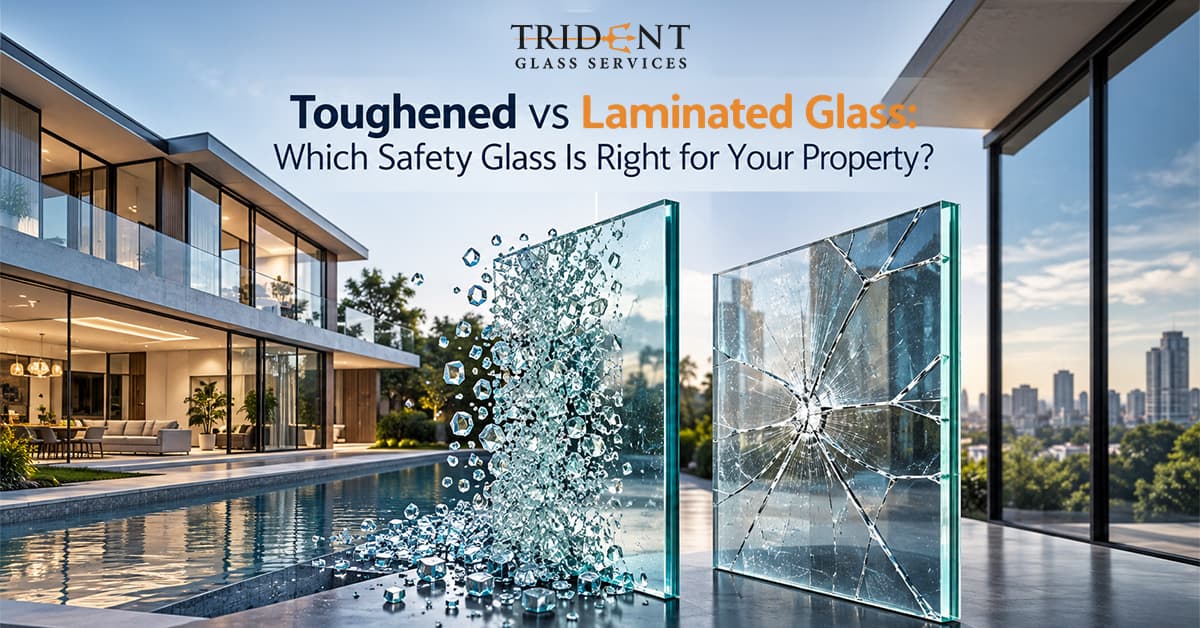
When toughened glass breaks, the entire panel fragments into small, dull-edged pieces. Injuries from these pieces are far less severe than injuries from a standard glass shard. The panel does not stay in the frame, so the opening is exposed immediately.
Spontaneous breakage is rare but possible because of nickel sulfide inclusions in the glass. Heat soak testing reduces that risk and is worth specifying for large facade panels.
How Laminated Glass Is Built and How It Performs
Laminated glass consists of two or more glass layers bonded with a polyvinyl butyral (PVB) interlayer, usually 0.38 mm or 0.76 mm thick, under heat and pressure. When the glass cracks, the interlayer holds the fragments in place. The panel stays in the frame and the opening remains closed.
This behaviour has practical consequences. An intruder who breaks a laminated pane still has to cut through the interlayer, which takes time and makes noise. Overhead glazing is safer because broken pieces do not fall onto people below. After a storm throws debris at a window, the glass is cracked but the building stays sealed.
The interlayer also absorbs sound and blocks up to 99 percent of UV radiation, which reduces fading of floors, timber furniture, and fabrics. Homes under flight paths or beside busy roads such as Parramatta Road gain the most from the acoustic performance. Exposed laminated edges can delaminate in constant moisture, so edge sealing matters in bathrooms and external applications.
Toughened vs Laminated Glass: Key Differences
A toughened pane is one sheet of heat-treated glass. It costs less and handles impact better, but it blocks very little UV and offers no acoustic gain over standard glass. Laminated glass is built from two or more sheets with a PVB layer between them. That layer cuts noise, filters up to 99 percent of UV, and slows forced entry. When toughened glass breaks, the whole pane drops out of the frame. A broken laminated pane stays where it is, held by the interlayer.
Toughened glass resists impact better. Laminated glass performs better after it breaks, which matters in security, storm, and overhead applications.
Where Each Glass Type Belongs in Your Property
Toughened glass is the usual choice for these applications:
Shower screens and bathroom enclosures
Glass doors and sidelights
Frameless balustrades and pool fencing
Kitchen splashbacks, where heat resistance matters
Laminated glass is the better fit for these applications:
Skylights, roof lights, and canopies
Ground-floor windows facing the street
Windows on busy roads or under flight paths
Shopfronts and display cabinets that need forced-entry delay
Bushfire-prone areas of Sydney, including parts of the Blue Mountains and Hornsby, add another requirement. Higher Bushfire Attack Level ratings under AS 3959 commonly call for toughened glass of a specified thickness, so confirm the rating for your property before you order.
Australian Standards That Apply to Safety Glass
AS 1288 covers the selection and installation of glass in buildings, and AS 2208 sets the performance requirements for safety glazing materials. Both toughened and laminated glass can qualify as safety glass under these standards when they carry the correct marking. Each compliant panel has a permanent mark showing the standard, the manufacturer, and the glass type. Check that mark on every panel delivered. The National Construction Code requires human-impact safety glazing in doors, sidelights, and low-level windows, and AS 1288 defines which locations fall into that category.
Combining Both: Toughened Laminated Glass
Some applications need impact strength and containment together. Balustrades, pool fencing, glass floors, and large overhead panels often use laminated glass made from two toughened panes. The toughened layers resist impact, and the interlayer keeps a broken panel in place until it is replaced. The combination costs more than either type alone.
Cost and Value Considerations
Toughened glass costs less than laminated glass of the same size and thickness. Laminated glass costs more because of the interlayer and the second pane. That extra cost is justified where security, noise reduction, or overhead safety is a requirement rather than a preference.
Conclusion
Toughened glass suits wet areas, doors, and balustrades, while laminated glass suits overhead, street-facing, and noise-affected locations. Many properties need both. If you are also upgrading thermal performance, Double Glazing Sydney projects can use either type within the sealed unit, and Double Glazed Windows Sydney installations in high-security or high-noise locations often specify a laminated pane. Contact Trident Glass Services for an assessment before you order.