
Few renovation choices change the feel of a home as much as swapping a heavy timber or metal railing for stairs with a glass balustrade. It's one of those upgrades that looks subtle in photos but transforms a space in person, opening up sightlines, letting light travel between floors, and making even a modest staircase feel like a feature. At Trident Glass Services, our Glass Balustrade Sydney team works with homeowners across the city on exactly this kind of upgrade, and in this guide, we'll walk through the design options, the practical considerations, and where to start.
Why Homeowners Are Making the Switch
A traditional timber or wrought-iron railing does the job structurally, but it also visually chops up a space. Replacing it with glass solves that problem while still meeting the same safety requirements. A few reasons this upgrade has become so popular:
Light flow. Glass lets natural light pass between levels rather than stopping at a solid rail.
Visual space. Open sightlines make narrow stairwells and split-level homes feel larger.
Low maintenance. No painting, no sanding, no rust. A glass cloth and mild detergent are usually all it takes.
Resale appeal. A glass balustrade reads as a deliberate, modern upgrade rather than a budget fix.
Durability. Toughened glass is processed under heat or chemical treatment to make it far stronger than ordinary glass, and it copes well with the daily knocks a staircase gets, kids, pets, and the occasional dropped vacuum cleaner without warping or cracking.
Frameless Glass Balustrade Stairs vs Framed Options
This option is usually the first decision homeowners get stuck on, and honestly, it's worth taking your time over since it's the choice that defines how the whole staircase reads.
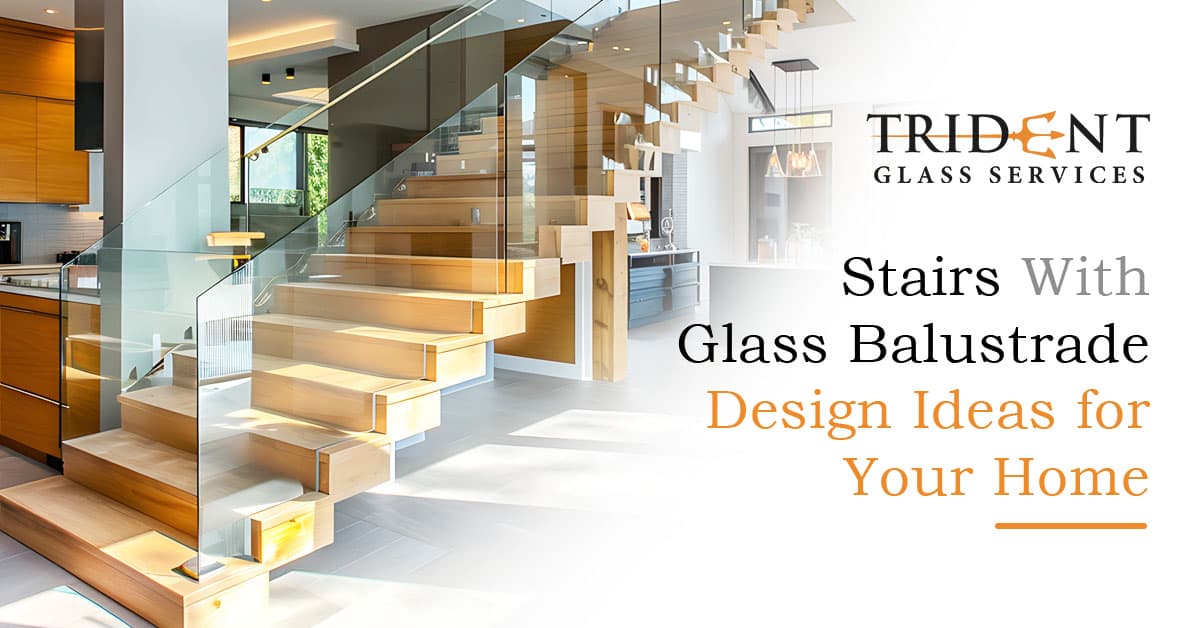
Frameless glass balustrade stairs eliminate visible posts or top rails altogether. The glass panels sit in base channels or are held by small spigots and standoff fittings, so what you actually see is just glass. It's the cleanest, most contemporary option, and it suits open-plan homes, entries, and duplex staircases where the stairs are visible from more than one room. The trade-off is cost: frameless systems use thicker glass and precision hardware, so they sit at the higher end of the budget.
Semi-frameless and framed systems bring the cost down while still using glass as the main visual element. A slim aluminium or stainless-steel frame, or a top-mounted handrail, adds support and can actually suit some design styles better, particularly if you're pairing the staircase with industrial or heritage finishes elsewhere in the home.
Design Ideas Worth Considering
Once you've settled on frameless or framed, there's still plenty of room to make the staircase your own. This is the part of the project most homeowners enjoy, since the structural decisions are largely locked in and what's left is purely about look and feel:
Matte black or brushed brass handrails contrast with clear glass panels, adding warmth.
Frosted or etched glass on the lower sections provides privacy near entries, while the upper run remains clear.
Curved or custom-cut panels for staircases that aren't a standard straight run.
Tinted glass to soften harsh light in north-facing stairwells.
Glass paired with timber treads for a warmer, more traditional finish than an all-glass-and-steel look.
Stairs with a glass balustrade also work well as a design thread that continues outdoors. Many homeowners pair an internal glass staircase with a matching glass balcony or deck balustrade, so the look carries through the whole property rather than stopping at the front door.
What to Check Before You Commit
A glass balustrade is a structural safety element as much as a design one, so a few things are worth confirming before installation:
The glass must be toughened (tempered) safety glass, certified to Australian standards
Balustrades with a fall of more than one metre generally require a handrail
The thickness and fixing method need to suit the specific span and height of your staircase
Heat-soaked glass is recommended, even where it isn't yet mandatory in NSW, as it reduces the risk of spontaneous breakage down the track
A reputable glazier will talk you through all of this as part of the quote, not as an afterthought once the glass has already been ordered.
Why Sydney Homeowners Choose Trident Glass Services
Trident Glass Services has more than 12 years of experience designing, supplying, and installing glass balustrades across Sydney homes, from internal staircases to balconies, decks, and pool surrounds. Every installation is carried out in accordance with the AS1288-2006 Australian Standard, using toughened safety glass and quality stainless-steel fittings. We offer a free measure and quote with no obligation, and we'll always talk you through frameless versus framed options based on your staircase, your budget, and how the space is actually used day to day.
Final Thoughts
Stairs with a glass balustrade are one of the few upgrades that genuinely change how a home feels, not just how it looks, by opening up light and sightlines that a solid railing simply can't match. Whether you're after fully frameless glass balustrade stairs or a more budget-friendly semi-framed option, getting the design and safety requirements right from the start makes all the difference. Homeowners who've already invested in frameless glass balustrade stairs often tell us it's the single upgrade visitors comment on most. Got a pool out the back too? Trident Glass Services handles pool fencing Sydney installations as well, so we can often quote the staircase and the pool fencing together and keep the look consistent across both. Give our team a call on 02 8605 3794 for a free, no-obligation quote.